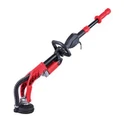
A concrete grinder is an essential tool in the construction and renovation industry, designed to smooth, level, and polish concrete surfaces. As a trusted supplier of high - quality grinders for concrete, I am excited to share how these remarkable machines operate.
The Basic Components of a Concrete Grinder
Before understanding how a concrete grinder works, it's crucial to know its main components. A typical concrete grinder consists of a motor, grinding discs or pads, a housing, and a control system.
The motor is the power source of the grinder. It provides the necessary energy to rotate the grinding discs. Depending on the model and intended use, motors can vary in power. For light - duty or home - based projects, a smaller motor may suffice, while heavy - duty commercial grinders often require more powerful motors to handle larger and tougher concrete surfaces.
Grinding discs or pads are attached to the bottom of the grinder. These are the parts that directly contact the concrete surface. They come in various materials, such as diamond, silicon carbide, or aluminum oxide. Diamond - coated discs are the most popular due to their exceptional durability and cutting ability. Different grit sizes of these discs are available, allowing users to achieve different levels of surface finish, from coarse grinding for removing coatings or leveling uneven surfaces to fine polishing for a smooth, shiny appearance.
The housing is the protective structure that encloses the motor and other internal components. It also provides a stable base for the grinder to operate on. The housing is usually made of sturdy materials like steel or high - impact plastic to withstand the rigors of the grinding process.
The control system allows the operator to regulate the speed, pressure, and sometimes the direction of the grinder. Modern grinders may have advanced digital control panels for precise adjustments.
The Working Principle
The working principle of a concrete grinder is based on the mechanical action of the rotating grinding discs against the concrete surface. When the motor is turned on, it drives the rotation of the grinding discs. The speed of rotation can be adjusted according to the task at hand.
As the grinding discs spin, they remove material from the concrete surface. In the case of a coarse - grit diamond disc, it can quickly remove thick layers of coatings like paint, epoxy, or old sealants. When the grinder passes over the surface, the diamonds on the disc cut into the concrete and the unwanted coating, breaking them down into small particles. These particles are then either collected by a dust - collection system or swept away during the grinding process.
For leveling uneven concrete floors, the grinder uses its weight and the grinding action to gradually wear down the high spots on the surface. The operator moves the grinder back and forth across the area, ensuring even removal of material. The pressure applied by the operator, along with the speed of the grinder, can affect the rate of material removal.
When it comes to polishing concrete, a series of finer - grit discs are used. Starting with a medium - grit disc to create a smooth base, and then progressing to finer and finer grits. Each grit level refines the surface further, reducing the surface roughness and creating a more polished look. The friction generated by the rotating discs and the concrete surface also generates heat, which can enhance the chemical reaction in some concrete polishing processes.
Different Types of Concrete Grinders and Their Working Modes
Walk - behind Concrete Grinders
Walk - behind concrete grinders are one of the most common types. They are suitable for medium to large - scale projects, such as commercial floors, warehouses, or garages.
In a walk - behind grinder, the operator stands behind the machine and guides it across the concrete surface. The grinder's wheels or tracks provide mobility. The grinding discs are usually located at the front or bottom of the machine. Some walk - behind grinders have multiple discs, which can increase the grinding efficiency. For example, a three - disc walk - behind grinder can cover a larger area in one pass compared to a single - disc grinder.
These grinders often have a self - propelled feature, which means the machine can move forward or backward on its own, reducing the physical effort required from the operator. The operator only needs to control the direction and the speed of the grinder using the control handles.
Hand - held Concrete Grinders
Hand - held concrete grinders are more suitable for small - scale projects, such as repairing small areas of concrete, grinding edges, or working in tight spaces.
The operator holds the grinder in their hands and moves it over the concrete surface. These grinders are generally lighter and more maneuverable than walk - behind grinders. However, they have less power and are usually used for less demanding tasks. The grinding disc on a hand - held grinder is typically smaller in diameter, which allows for more precise grinding.
Planetary Concrete Floor Grinders
Planetary concrete floor grinders are a specialized type of grinder that offers high - efficiency grinding and polishing. You can find more information about Planetary Concrete Floor Grinder.
In a planetary grinder, the grinding discs are arranged in a planetary motion. This means that each disc rotates on its own axis while also orbiting around a central point. This unique motion pattern allows the grinder to cover a larger area more evenly and efficiently compared to traditional grinders. Planetary grinders are often used for large - scale commercial projects where a high - quality finish is required. They can handle both coarse grinding and fine polishing tasks with ease.


The Role of Dust Collection in Concrete Grinding
Dust collection is a critical aspect of concrete grinding. When grinding concrete, a large amount of dust is generated. This dust contains harmful particles such as silica, which can cause serious health problems like silicosis if inhaled.
Most modern concrete grinders are equipped with dust - collection systems. These systems work by creating a negative pressure inside the grinder housing. As the grinding discs remove material from the concrete surface, the dust particles are sucked into the dust - collection device. The dust is then trapped in a filter or a collection bag, preventing it from being released into the air.
Proper dust collection not only protects the health of the operator and those in the surrounding area but also improves the quality of the grinding process. Dust can interfere with the grinding action, reducing the efficiency of the grinder and causing uneven surface finishes. By keeping the work area clean, the grinding discs can operate more effectively, resulting in a better - looking concrete surface.
Applications of Concrete Grinders
Concrete grinders have a wide range of applications in the construction and renovation industry.
In new construction projects, concrete grinders are used to prepare the concrete surface for further finishing. For example, before installing floor coverings like tiles, carpet, or epoxy coatings, the concrete surface needs to be smooth and level. A concrete grinder can remove any bumps, ridges, or excess concrete, creating a perfect base for the new floor covering.
In renovation projects, concrete grinders are used to remove old coatings, stains, or damaged concrete. If a commercial floor has been painted or has an old epoxy coating that needs to be removed, a grinder can quickly and efficiently strip away the unwanted material.
For decorative purposes, concrete grinders are used to create polished concrete floors. Polished concrete has become increasingly popular in recent years due to its durability, low maintenance, and aesthetic appeal. With the right combination of grinding discs and polishing compounds, a concrete floor can be transformed into a shiny, mirror - like surface.
Choosing the Right Concrete Grinder for Your Project
Selecting the appropriate concrete grinder depends on several factors.
If you are working on a small project, such as a home garage or a small patio, a Concrete Floor Grinder 110v may be sufficient. These grinders are lightweight, easy to operate, and are often powered by a standard household electrical outlet.
For larger commercial projects, an Industrial Concrete Grinder is recommended. These grinders are more powerful, have larger grinding discs, and are built to withstand heavy - duty use. They also often come with advanced features like automatic control systems and high - capacity dust - collection units.
The type of concrete surface you are working on also matters. If the surface is very rough or has thick coatings, a grinder with a high - power motor and coarse - grit grinding discs is needed. For softer concrete or surfaces that only require light grinding and polishing, a less powerful grinder with finer - grit discs may be more appropriate.
Conclusion
Concrete grinders are versatile and powerful tools that play a vital role in the construction and renovation industry. Their ability to smooth, level, and polish concrete surfaces makes them indispensable for a wide range of projects. Whether you are a professional contractor or a DIY enthusiast, understanding how a concrete grinder works can help you make the most of these machines.
If you are in the market for a high - quality concrete grinder, we are here to assist you. We offer a wide range of concrete grinders to suit different project requirements. Our experienced team can provide you with detailed product information and help you choose the right grinder for your specific needs. Don't hesitate to contact us for procurement and in - depth discussions about your projects.
References
- Concrete Construction Handbook, various editions
- Manufacturer's manuals for popular concrete grinder models