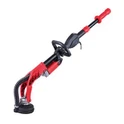
Can a Diamond Concrete Grinder be used on uneven concrete surfaces?
As a supplier of diamond concrete grinders, I often get asked whether our machines are suitable for uneven concrete surfaces. This is an important question as many construction and renovation projects involve working with surfaces that are far from perfectly flat. In this blog post, I'll delve into the capabilities of diamond concrete grinders when it comes to uneven concrete, explore the factors you need to consider, and provide some practical tips for getting the best results.
Understanding Diamond Concrete Grinders
Before we discuss their use on uneven surfaces, let's briefly understand what diamond concrete grinders are. These machines are equipped with diamond - tipped blades or segments. Diamond is one of the hardest materials known, which makes it ideal for cutting through concrete. The grinding action of a diamond concrete grinder works by removing the top layer of concrete, smoothing it out, and preparing it for further treatments such as polishing or coating.
There are different types of diamond concrete grinders available on the market, each with its own set of features and applications. For instance, you can explore our Floor Grinding and Polishing Machine, which is designed for a wide range of floor preparation tasks. Our Planetary Concrete Grinding Machine Floor Grinder offers a more advanced grinding mechanism, providing better coverage and efficiency. And the Diamond Blade Concrete Grinder is specifically engineered with high - quality diamond blades for precise grinding.
Can They Work on Uneven Surfaces?
The short answer is yes, diamond concrete grinders can be used on uneven concrete surfaces. However, there are several factors that need to be taken into account to ensure a successful outcome.
1. Severity of the unevenness
If the unevenness is minor, such as small bumps or depressions within a few millimeters, a diamond concrete grinder can easily level the surface. The grinder's diamond blades are capable of gradually removing the high spots until the surface becomes more uniform. For example, in an old warehouse floor where there are small ridges due to years of heavy machinery traffic, a diamond grinder can effectively smooth out these areas.
On the other hand, if the unevenness is significant, like large dips or humps that are several centimeters deep or high, additional steps may be required. In such cases, it might be necessary to use a concrete leveling compound first to fill in the low areas and then use the diamond grinder to fine - tune the surface.
2. Type of grinder
The type of diamond concrete grinder you choose also plays a crucial role. Some grinders are more suitable for light - duty unevenness, while others are designed for heavy - duty applications. For minor irregularities, a handheld or small - scale walk - behind grinder may be sufficient. These machines offer better maneuverability and can be used to target specific problem areas.
For more extensive uneven surfaces, larger, more powerful floor grinders are recommended. Planetary grinders, in particular, are excellent for covering large areas and can handle more severe unevenness due to their multiple grinding heads that rotate in a planetary motion, providing a more consistent and thorough grinding action.
3. Diamond grit selection
The grit of the diamond blades on the grinder is another important factor. For uneven surfaces, a coarser grit is usually the first choice. Coarse grits, such as 16 - 30 grit, are more aggressive and can quickly remove the high spots on the concrete. Once the major unevenness has been addressed, you can switch to finer grits to achieve a smoother finish. For example, if you start with a 20 - grit diamond blade to level the surface, you can follow up with 40 - 80 grit blades for intermediate grinding and then 100 - 400 grit blades for a polished look if desired.
Practical Tips for Grinding Uneven Concrete Surfaces
Here are some practical tips to help you get the best results when using a diamond concrete grinder on uneven surfaces:
1. Surface inspection
Before you start grinding, thoroughly inspect the concrete surface. Identify the areas of high and low spots, as well as any cracks or other defects. This will help you plan your grinding strategy and determine the appropriate diamond grit and grinder settings.
2. Test grinding
It's always a good idea to perform a test grind in a small, inconspicuous area. This allows you to evaluate the grinder's performance, assess the effectiveness of the diamond grit, and make any necessary adjustments before working on the entire surface.
3. Overlapping passes
When grinding, make sure to overlap each pass slightly. This helps to ensure a consistent finish and prevents uneven grinding. For larger grinders, overlapping by about 1/3 to 1/2 of the grinder's width is recommended.
4. Dust management
Grinding concrete generates a significant amount of dust, which can be harmful to your health and cause damage to the environment. Use a proper dust collection system to capture the dust as you grind. This not only keeps the work area clean but also protects you and your team from inhaling harmful particles.
Conclusion
In conclusion, diamond concrete grinders can indeed be used on uneven concrete surfaces, but success depends on understanding the nature of the unevenness, selecting the right grinder, and using the appropriate diamond grit. With the right equipment and techniques, you can transform an uneven concrete surface into a smooth, level, and aesthetically pleasing floor.


If you're considering a project that involves grinding uneven concrete surfaces, we're here to help. Our range of high - quality diamond concrete grinders is designed to meet the diverse needs of construction and renovation professionals. Whether you need a small handheld grinder for a minor project or a large Planetary Concrete Grinding Machine for a commercial job, we have the solution for you.
We're eager to discuss your specific requirements and provide you with the best product recommendations. Reach out to us to start a conversation about your grinding needs and let's work together to achieve the best results for your project.
References
- ASTM International. (20XX). Standard Test Methods for Concrete.
- Concrete Construction Handbook. (20XX). McGraw - Hill Professional.