


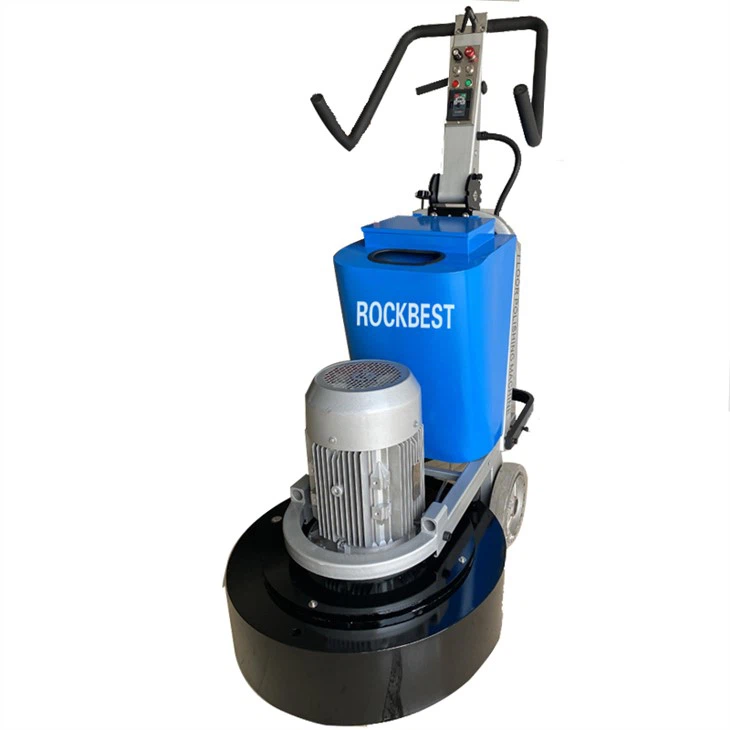
What is Planetary Floor Machine
A planetary floor machine, also known as a planetary concrete grinder, is a machine used to polish and grind concrete floors. It has a large central disc with smaller discs rotating around it at different speeds.
Why Choose Us
Famous Brand
With 30 years of production technology, our famous floor machine brand is committed to offering you the best price and the highest quality products to grow your business.
Our Products
Rockbest Machinery specializes in developing and manufacturing concrete floor grinders, concrete scarifiers, concrete floor shot blasters, and related floor preparation machines and diamond tools.
Professional Factory
We can fulfill your OEM and ODM requirements with our own production bases and collaborations with partners. We have exported our machines to many countries, earning a good reputation. Our experienced technicians and professional sales team can quickly and effectively resolve any machine issues.
Our Certificates
We have a strict quality control system and all our machines have passed the CE certification. We hold patents for National Invention and New Practical designs.

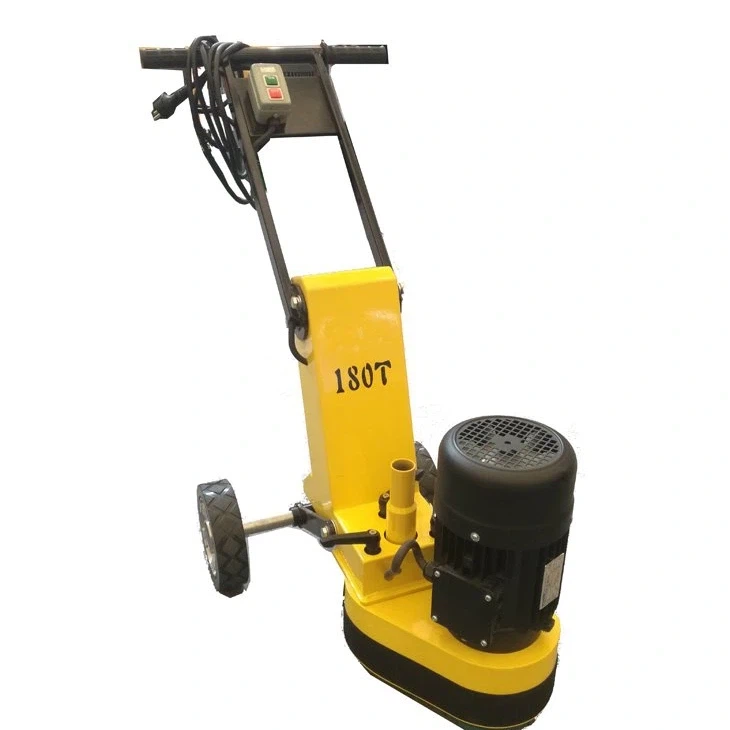

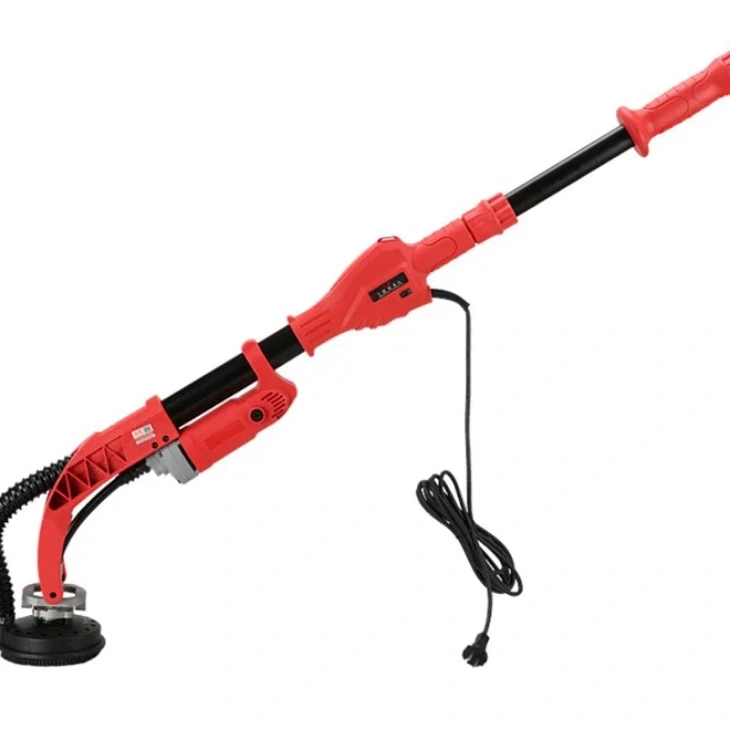
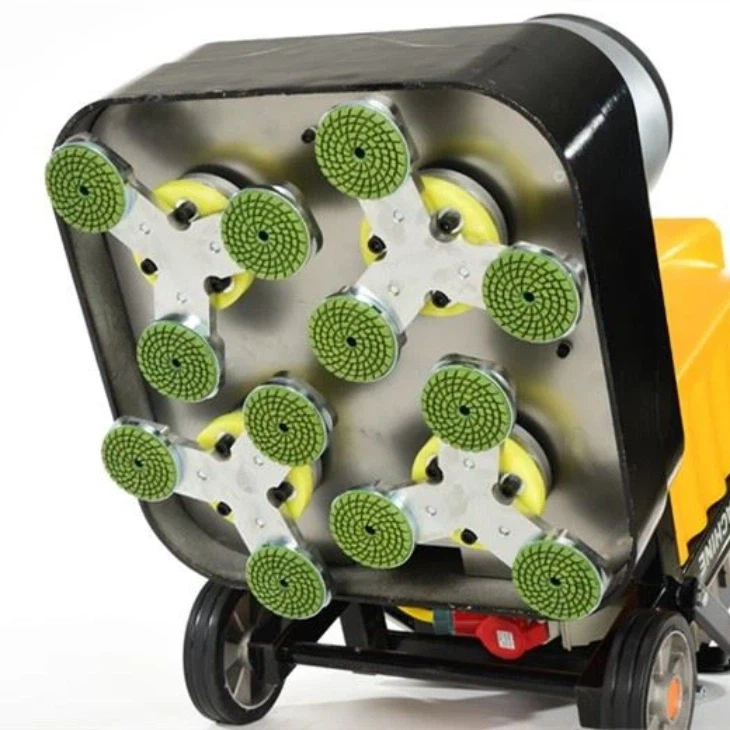


A planetary grinder gets its name due to its similarity to how planets work. There is a large main disc that acts as a central point around which several small discs rotate at different speeds from the large disc. The small discs all grind or polish the surface simultaneously while the large disc doesn't come in contact with the floor. Think of it like the large disc is the sun and the small discs are the planets orbiting the sun while also turning on their own axis.
Benefits:
Planetary floor grinders are generally lightweight compared to rotary grinders. Because of this, they are easier to operate and maneuver, but this also means they are ideal for less intensive grinding tasks, like smoothing a garage floor or opening up concrete to add an epoxy coating. Planetary grinders are also good for polishing concrete and stone, but as this requires more skill, a more experienced operator should be tasked with this type of project.
Add Extra Weight To Your Floor Grinder
A floor grinder is used to grind concrete floors and give them a smooth and even surface. To achieve the best possible results, it may sometimes be necessary to add extra weight to the floor grinder. This is done by attaching extra-weight plates to the machine's hood.
There are several situations where extra weight can be advantageous. One of the most common is when the concrete floor is uneven, you need to remove coatings, or the floor has significant damage. By adding extra weight, the floor grinder can create enough pressure on the surface to grind away unevenness and damage. Very hard and uneven surfaces may require even more weight to provide enough pressure to achieve the desired results.
There are several benefits to adding extra weight to a floor grinder. Firstly, it increases the machine's stability, and makes it easier to handle. This gives the operator better control over the floor grinder and allows them to perform the grinding work more efficiently. Extra weight can also increase the machine's grinding capacity and make it easier to remove tough coatings or unevenness.
Another advantage of using extra weight is that it reduces the risk of damage to the concrete floor. By adding extra pressure to the surface, the machine can work more effectively and in a more even manner. This prevents the concrete floor from becoming marked or damaged during the grinding process.
It is important to note that extra weight should be used with caution and only when necessary. Too much weight can actually be harmful to both the machine and the concrete floor. Therefore, it is important to carefully evaluate the needs and application before adding additional weight to a floor grinder.
Adding extra weight to a floor grinder can be advantageous when grinding concrete floors with unevenness or damage. It increases stability, improves control over the floor grinder, and reduces the risk of damage. By using extra weight, the floor grinder can provide better grinding capacity and achieve smoother and more satisfying results.
If you have researched the surface prep and concrete polish market, you will know that concrete grinder machines do not come cheap. As is the case with many things in life it's important to make sure we are getting exactly what we need, getting the right amount of value, and buying the best product available.
First, we will discuss the two head configurations of grinders, planetary and rotative. Next, we discuss the power options (This might sound unnecessary, but when it comes to voltage, phases, and propane there are lots to discuss). Finally, we will break down what to look for in the size and weight of these powerful machines.
Planetary vs. Rotative
One of the first things you need to consider is choosing between a planetary or rotative machine. The terms Planetary and Rotative refer to how the discs move to get the job done. Each configuration is capable of a complete floor polish or grinding with its own specifications.
Planetary Grinders
A planetary grinder has one large disc with three smaller discs mounted on it. A good way to visualize a planetary grinder is the large disc is similar to the sun, with smaller planets/discs rotating on their own axis around the sun (larger plate). The larger disc will never come into contact with the ground because its purpose is to rotate the smaller discs.
A planetary grinder is typically a lighter weight machine compared to rotative machines, which in some cases can make them more maneuverable and easier to work with. Concrete Grinders are either belt-driven or gear-driven. Planetary machine configurations are often made to be belt-driven.
Rotative Grinders
A rotary or rotative grinder turns on a fixed axis, allowing it to have multiple heads. The main limitation of this type of grinder is the width of the machine. Some rotative grinders have as many as 8-10 heads, although the most common arrangement is the 2 and 4 head configuration.
When you have multiple heads on a rotative grinder, you will most likely have a counter-rotating machine. This means the different heads rotate in opposite directions, making them easier to use for the operator and allowing the machine to go in a straight line.
Rotative Grinders are always gear-driven and heavier than planetary machines. This can make them a better choice for removing thick glues or paint.
Power Options for Concrete Floor Grinders
A concrete grinder can come in a variety of power options including electric or propane. Each of these options has factors that make them ideal for the type of work you are doing.
Electric machines typically come in 110, 220-240, or 380-480 volt machines. They also come in single-phase and three-phase configurations. 110 volt machines come in only a single phase. 220-240 volt are often offered in single-phase and three-phase. 380-480 volt are typically always a three-phase machine.
What you Need to know about Single-Phase vs Three-Phase:
Single-phase: Is a two-wire alternating current (AC) power circuit, common in most residential homes. If you plan on doing only residential jobs a single phase is the way to go. The main advantage of a single-phase machineIs that the equipment is typically smaller, costs less, and power is more available to use.
Three-phase: Is a three-wire of alternating current power circuit. Each leg of alternating current reaches a maximum voltage. This can get complicated, but to simplify, you have more consistent power that never drops to zero. These machines are large and powerful machines that require more power consumption. Three-phase motors will cost more, but they will also generate more power, making them worth the investment.
Size and Weight of Concrete
Is size an important factor when choosing a grinder? The answer is a bit complicated. A larger machine will get the job done faster than a smaller machine if they have a larger grinding head to complete concrete passes. A smaller machine will complete everything a large machine can, but will fit in smaller spaces such as a doorway or hallway. Therefore, which machine you need will largely depend on the jobs you plan on doing.
Weight is also important to consider. We have discussed how rotary grinders are often heavier than planetary. When grinding concrete extra weight can be useful in removing those hard-to-remove surfaces. To combat this problem, many grinders have a weight system that can be added and removed so that you have the right downward head pressure for the job. Therefore, in the past, a rotary might have been your only solution when buying a heavier machine. Today though, you have many options that ultimately will come down to what the contractor wants.
What To Consider When Selecting a Floor Grinder
For anyone looking to choose a floor grinding machine, there are a few considerations other than just budget.
The first question to consider is the nature and size of the job and the type of floor to be treated. What type of floor is to be ground, and how large a surface area is to be treated? How fine a result is wanted, and is this intended to be the final finishing before a polish?
This helps to address the biggest decision, which will be the type of grinding head and the size of the machine. For example, for a large-scale concrete or hard-surfaced floor, an industrial-sized grinder with a rotary head may be the best choice, as they are designed for large, tough jobs. For smaller and finer grinding, a more modest-sized planetary grinder may be a better choice.
The next question to ask would be whether a wet or dry grind is preferred or necessary for the environment. Grinding can create a lot of dust, so a floor grinder that offers a dust vacuum or a water injection feature may be preferred. Make sure that the dust cover contains much of the dust or water from spreading around the room.
Additional questions, related to the size of the job as well as the budget, would be: what extra facilities or functionality are needed? For example, is a remote control desired, or will the operator be required to push the grinder constantly?
Are multi-speed and multi-grinding heads wanted, and how easy are they to change? Is a multifunctional grinder preferred that can handle heavy grinding but also additional polishing/ and finishing?
When choosing a floor grinding machine, consider the type of grinding head, and the size of the machine. Is wet or dry grinding preferred? Water injection keeps dust down and smooths the grinding. Dry grinding creates a lot of dust, so a dust vacuum feature would be preferred. Some machines come with a remote control, and others offer multi-speed grinding.
We have strict quality control system and has passed CE certificate for all machines. We can do OEM and ODM for your requirements with our own production bases and some well cooperation partners. we have exported our machines to many countries with good reputation and we can quickly and effectively solve the problems for the machine with experienced technician and professional sales.

Our Certificate


FAQ
Hot Tags: planetary floor machine, China planetary floor machine manufacturers, suppliers, factory, floor grinder for concrete, , concrete grinder blades, reliable concrete grinder


