Hey there! As a supplier of Diamond Concrete Grinders, I often get asked about the maximum grinding depth of these machines. It's a crucial question, especially for those in the concrete flooring and construction industries. So, let's dive right into it and explore what the maximum grinding depth of a Diamond Concrete Grinder really means and how it can impact your projects.
First off, what exactly is the grinding depth? Well, it's the amount of material that a Diamond Concrete Grinder can remove from a concrete surface in a single pass. This depth can vary significantly depending on several factors, such as the type of grinder, the hardness of the concrete, and the quality of the diamond segments on the grinding discs.
When it comes to the types of Diamond Concrete Grinders, there are various models available on the market. Some are small, handheld units, while others are large, industrial - scale machines. Handheld grinders are typically used for smaller, more detailed jobs, like edge work or light surface preparation. These usually have a relatively shallow maximum grinding depth, often in the range of 0.1 - 0.5 mm per pass. This is because they are designed for precision work and don't have the power and stability of larger machines.
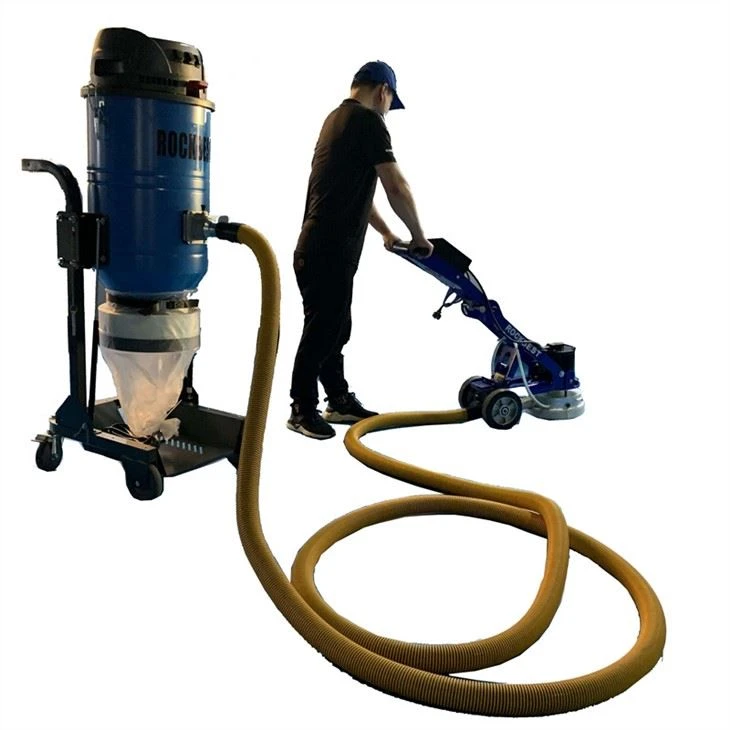
On the other hand, floor - mounted or walk - behind Diamond Concrete Grinders are built for heavy - duty work. These machines can have a much greater grinding depth. For example, some high - end industrial floor grinders can achieve a maximum grinding depth of up to 3 - 5 mm per pass. This makes them ideal for large - scale projects such as leveling uneven concrete floors, removing old coatings, or preparing surfaces for new overlays.
The hardness of the concrete is another major factor that affects the maximum grinding depth. Concrete can vary widely in terms of its hardness, depending on factors like the mix design, curing process, and age. Soft concrete, which is often found in older buildings or areas with high water - to - cement ratios, is easier to grind. A Diamond Concrete Grinder can typically achieve a greater grinding depth on soft concrete compared to hard, well - cured concrete.
Hard concrete, like that used in industrial facilities or high - traffic areas, has a more compact structure and is more resistant to grinding. In these cases, the maximum grinding depth may be reduced, and you might need to make multiple passes with the grinder to achieve the desired result. It's important to note that trying to force a grinder to remove too much material at once on hard concrete can lead to premature wear of the diamond segments and damage to the machine.
The quality of the diamond segments on the grinding discs also plays a vital role. High - quality diamond segments are designed to cut through concrete more efficiently and can withstand the rigors of grinding. They are made with a higher concentration of diamonds and a better bonding agent, which allows for a deeper and more consistent grinding depth. Cheaper, lower - quality segments may wear out quickly and not be able to achieve the same maximum grinding depth as their high - end counterparts.
Now, let's talk about how the maximum grinding depth impacts your projects. If you're working on a project that requires a significant amount of material removal, such as leveling a severely uneven floor, you'll need a Diamond Concrete Grinder with a high maximum grinding depth. This will save you time and effort by allowing you to remove more material in fewer passes.
For example, if you're using a grinder with a maximum grinding depth of 1 mm per pass to level a floor that needs 5 mm of material removal, you'll need to make five passes. But if you have a grinder with a maximum grinding depth of 5 mm per pass, you can get the job done in just one pass. This not only speeds up the project but also reduces the wear and tear on the machine and the operator.
On the other hand, if you're working on a project that requires a more delicate touch, such as polishing a concrete floor, a grinder with a shallow maximum grinding depth is more appropriate. This will allow you to make fine adjustments to the surface without removing too much material and damaging the finish.
As a Diamond Concrete Grinder supplier, I understand the importance of choosing the right machine for your specific needs. That's why we offer a wide range of grinders, each with different maximum grinding depths to suit various projects. Whether you're a small contractor working on residential jobs or a large construction company tackling commercial projects, we have the perfect grinder for you.
If you're interested in learning more about our Diamond Concrete Grinders, you can check out our Concrete Floor Grinding Polishing page. Here, you'll find detailed information about the different models we offer, their features, and how they can be used for various applications.
We also have a great selection of Floor Grinding Machine options. These machines are built to last and are designed to provide the best performance in terms of grinding depth and efficiency.
And if you're looking for a specific size, our 280mm Floor Grinder is a popular choice. It offers a good balance between portability and grinding power, making it suitable for a variety of projects.
In conclusion, the maximum grinding depth of a Diamond Concrete Grinder is an important factor to consider when choosing a machine for your concrete projects. It depends on the type of grinder, the hardness of the concrete, and the quality of the diamond segments. By understanding these factors and choosing the right grinder for your needs, you can ensure that your projects are completed efficiently and to the highest standard.
If you have any questions or are interested in purchasing a Diamond Concrete Grinder, don't hesitate to reach out. We're here to help you find the perfect solution for your concrete grinding needs.
References

- Concrete Construction Handbook, various editions
- Industry reports on Diamond Concrete Grinders and their performance