A planetary floor grinder is a powerful and versatile machine widely used in the floor preparation and finishing industry. As a supplier of planetary floor grinders, I am often asked about the working principle of these remarkable machines. In this blog post, I will delve into the details of how a planetary floor grinder operates, its key components, and the benefits it offers.
Basic Structure and Components
Before we explore the working principle, let's first understand the main components of a planetary floor grinder. A typical planetary floor grinder consists of the following parts:
- Motor: The motor is the power source of the grinder. It provides the necessary energy to drive the grinding heads and perform the grinding operation. Depending on the model and application, the motor can be electric, gasoline, or diesel-powered.
- Gearbox: The gearbox is responsible for transmitting the power from the motor to the grinding heads. It allows for different speed settings and torque adjustments, enabling the grinder to adapt to various floor materials and grinding requirements.
- Grinding Heads: The grinding heads are the most important part of the planetary floor grinder. They are equipped with abrasive tools, such as diamond segments or pads, which come into contact with the floor surface and remove material through abrasion. The number and arrangement of the grinding heads can vary depending on the size and design of the grinder.
- Planetary Gear System: The planetary gear system is a unique feature of the planetary floor grinder. It consists of a central gear (sun gear) and multiple planetary gears that rotate around the sun gear. This arrangement allows the grinding heads to move in a complex orbital motion, covering a larger area and providing more consistent grinding results.
- Vacuum System: Many planetary floor grinders are equipped with a vacuum system to collect the dust generated during the grinding process. This helps to keep the work environment clean and safe, and also prevents the dust from spreading and causing health hazards.
Working Principle
The working principle of a planetary floor grinder is based on the combination of the orbital motion of the grinding heads and the abrasive action of the grinding tools. Here is a step-by-step explanation of how it works:
- Power On: The operator starts the motor, which provides power to the gearbox. The gearbox then transfers the power to the planetary gear system and the grinding heads.
- Orbital Motion: The planetary gear system causes the grinding heads to move in a circular motion around the central axis of the grinder, while also rotating on their own axes. This orbital motion allows the grinding heads to cover a larger area and ensures that the abrasive tools make contact with the floor surface from different angles.
- Abrasive Action: As the grinding heads move across the floor surface, the abrasive tools on the grinding heads come into contact with the floor material. The abrasive particles on the tools remove the top layer of the floor, such as paint, coatings, or concrete, through abrasion. The amount of material removed depends on the type and grit of the abrasive tools, as well as the pressure applied by the grinder.
- Dust Collection: During the grinding process, a large amount of dust is generated. The vacuum system, if installed, sucks up the dust and collects it in a dust bag or container. This helps to keep the work area clean and reduces the risk of dust inhalation.
- Adjustment and Control: The operator can adjust the speed, pressure, and direction of the grinder to achieve the desired grinding results. For example, a higher speed may be used for rough grinding, while a lower speed may be more suitable for fine finishing. The pressure can also be adjusted to control the depth of the grinding.
Advantages of Planetary Floor Grinders
Planetary floor grinders offer several advantages over other types of floor grinding machines, making them a popular choice in the industry. Here are some of the key benefits:
- Efficient Grinding: The orbital motion of the grinding heads allows for a more efficient and uniform grinding process. It covers a larger area in a shorter time, reducing the overall grinding time and increasing productivity.
- Versatility: Planetary floor grinders can be used on a variety of floor materials, including concrete, stone, terrazzo, and epoxy. They can perform different types of grinding operations, such as surface preparation, leveling, polishing, and coating removal.
- Consistent Results: The complex orbital motion of the grinding heads ensures that the abrasive tools make contact with the floor surface from different angles, providing more consistent grinding results. This helps to achieve a smooth and even finish on the floor.
- Reduced Vibration: The planetary gear system helps to reduce vibration and noise during the grinding process. This makes the grinder more comfortable to operate and reduces the risk of operator fatigue.
- Dust Control: Many planetary floor grinders are equipped with a vacuum system to collect the dust generated during the grinding process. This helps to keep the work environment clean and safe, and also meets the environmental and health regulations.
Applications
Planetary floor grinders are widely used in various applications, including:

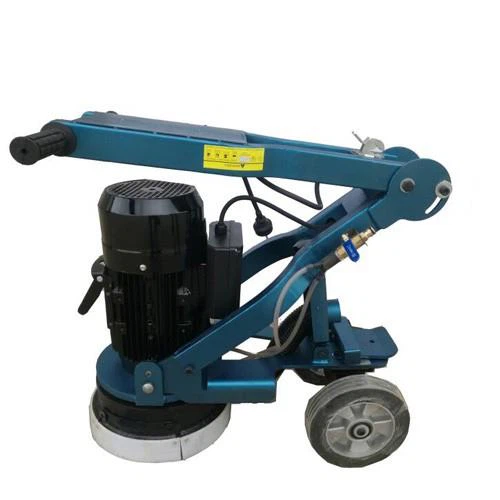
- Concrete Floor Preparation: Before applying coatings or coverings to a concrete floor, it is important to prepare the surface properly. Planetary floor grinders can be used to remove dirt, grease, old coatings, and unevenness from the concrete surface, creating a smooth and clean substrate for the new coating or covering.
- Floor Leveling: If the floor is uneven or has high and low spots, a planetary floor grinder can be used to level the surface. By removing the high spots and filling the low spots, the grinder can create a flat and level floor that is suitable for further finishing.
- Polishing: Planetary floor grinders can also be used to polish concrete floors to a high shine. By using different grits of abrasive pads, the grinder can gradually smooth the surface and enhance the appearance of the floor.
- Coating Removal: When it is necessary to remove old coatings, such as paint, epoxy, or polyurethane, from a floor surface, a planetary floor grinder can be an effective tool. The abrasive action of the grinding heads can quickly and efficiently remove the coating, leaving the floor ready for a new coating or finish.
Conclusion
In conclusion, the working principle of a planetary floor grinder is based on the combination of the orbital motion of the grinding heads and the abrasive action of the grinding tools. This unique design allows for efficient and uniform grinding, making it a popular choice in the floor preparation and finishing industry. As a supplier of planetary floor grinders, we offer a wide range of models and configurations to meet the different needs and requirements of our customers. If you are interested in learning more about our products or have any questions, please feel free to contact us. We are always happy to help you find the right solution for your floor grinding needs.
If you are looking for a reliable and efficient floor grinder, you may be interested in our Concrete Floor Surface Grinder, Hand Held Cement Grinder, or Grinding Machine For Floor. These products are designed to provide high-quality grinding performance and are suitable for a variety of applications.
If you have any questions or would like to discuss your floor grinding requirements, please do not hesitate to contact us. Our team of experts is ready to assist you and provide you with the best solution for your needs.
References
- "Floor Grinding and Polishing Handbook" by John Doe
- "Concrete Surface Preparation: A Guide for the Industry" by Jane Smith
- "Planetary Floor Grinders: Working Principles and Applications" by Tom Brown