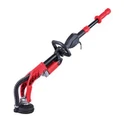
Hey there! As a supplier of Concrete Grinding Tools, I often get asked about the recommended RPM (Revolutions Per Minute) for these tools. It's a crucial question because getting the RPM right can make a huge difference in the efficiency and quality of your concrete grinding projects.
First off, let's understand why RPM matters. The RPM of a concrete grinding tool affects how the tool interacts with the concrete surface. If the RPM is too low, the tool might not be able to cut through the concrete effectively, leading to a slow and inefficient grinding process. On the other hand, if the RPM is too high, it can cause excessive wear and tear on the tool, generate too much heat, and even damage the concrete surface.
The ideal RPM depends on several factors. One of the most important factors is the type of concrete grinding tool you're using. For example, HTC Floor Polishing Tools are designed to work at specific RPM ranges to achieve the best results. These tools are often used for polishing concrete floors to a high - gloss finish. They usually require a relatively high RPM to ensure a smooth and even polish. Typically, for HTC Floor Polishing Tools, the recommended RPM can range from 1500 to 3000 RPM. This high RPM allows the abrasive particles on the tool to quickly remove the top layer of the concrete, revealing a smooth and shiny surface.
Another popular type of concrete grinding tool is the Lavina Diamond Grinding Block. These blocks are great for removing thick coatings, leveling uneven concrete surfaces, or preparing a surface for further treatment. The recommended RPM for Lavina Diamond Grinding Blocks is often in the range of 1000 to 2000 RPM. At this RPM, the diamond - tipped blocks can effectively grind the concrete without overheating the tool or causing too much damage to the surface. The lower RPM gives the blocks more time to make contact with the concrete and perform their grinding action, especially when dealing with tough coatings or uneven areas.
Then there's the Concrete Grinding Wheel. These wheels are used for a variety of tasks, from rough grinding to finishing. The recommended RPM for a Concrete Grinding Wheel can vary widely depending on its size and the specific application. Smaller grinding wheels, say those with a diameter of 4 - 6 inches, can often operate at higher RPMs, sometimes up to 3500 RPM. Larger wheels, like 12 - 14 inches in diameter, usually work best at lower RPMs, around 1000 - 1500 RPM. This is because larger wheels have more mass and momentum, and running them at too high an RPM can be dangerous and may also lead to uneven grinding.
The hardness of the concrete is also a significant factor in determining the recommended RPM. Harder concrete requires more force to grind. In such cases, you might need to increase the RPM slightly to ensure that the tool can cut through the tough surface. However, you also need to be careful not to go too high, as this can cause the tool to wear out quickly. Softer concrete, on the other hand, can be ground at a lower RPM. This helps prevent over - grinding and damage to the surface.
The condition of the concrete surface plays a role too. If the surface has a lot of bumps, ridges, or thick coatings, you might need to start with a lower RPM to gradually break down the irregularities. Once the surface is more even, you can increase the RPM for a finer finish. For example, when using a Lavina Diamond Grinding Block on a concrete floor with a thick epoxy coating, start at around 1000 RPM to remove the coating. After the coating is mostly gone, you can increase the RPM to 1500 - 2000 RPM to smooth out the surface.
It's also important to consider the power source of your grinding equipment. Electric grinders usually have a fixed RPM or a limited range of adjustable RPMs. Gas - powered grinders, on the other hand, can sometimes offer more flexibility in terms of RPM adjustment. But you still need to make sure that you're within the recommended RPM range for your specific tool.
When it comes to actually using the concrete grinding tools, always follow the manufacturer's instructions. They have done extensive testing to determine the optimal RPM for their products. Ignoring these recommendations can not only lead to poor results but also void the warranty of the tool.
In addition to the RPM, other factors like the pressure applied to the tool, the feed rate, and the coolant usage (if applicable) also affect the grinding process. For example, applying too much pressure can cause the tool to overheat and wear out faster, even if you're within the recommended RPM range.
If you're new to concrete grinding, it's a good idea to start with a lower RPM and gradually increase it as you get more comfortable with the process and understand how the tool interacts with the concrete. This trial - and - error approach can help you find the sweet spot for your specific project.
As a supplier of Concrete Grinding Tools, I'm always here to help you choose the right tool and determine the appropriate RPM for your job. Whether you're a professional contractor working on large - scale projects or a DIY enthusiast looking to spruce up your garage floor, we have a wide range of tools to meet your needs.
If you're interested in purchasing any of our concrete grinding tools or have more questions about RPM and how it affects your projects, don't hesitate to get in touch. We can provide you with detailed product information, technical support, and advice on how to get the best results from your concrete grinding efforts.
References:


- Manufacturer's manuals for HTC Floor Polishing Tools, Lavina Diamond Grinding Block, and Concrete Grinding Wheel.
- Industry - standard guidelines on concrete grinding and polishing.