What is the Grinding Speed of a Typical Grinder for Concrete?
As a seasoned supplier of concrete grinders, I've witnessed firsthand the pivotal role that grinding speed plays in the efficiency and quality of concrete surface treatment. In this blog, I'll delve into the concept of grinding speed, factors influencing it, and how it impacts your concrete grinding projects.
Understanding Grinding Speed
Grinding speed, in the context of concrete grinders, refers to the rate at which the grinding discs or pads rotate and move across the concrete surface. It is typically measured in revolutions per minute (RPM) for the rotation of the grinding elements and linear feet per minute (FPM) for the movement of the grinder across the floor.
For a typical concrete grinder, the grinding speed can vary significantly depending on the type of grinder, the nature of the concrete surface, and the desired finish. Let's take a closer look at some common types of concrete grinders and their typical grinding speeds.
Self - Propelled Concrete Grinder
Self - Propelled Concrete Grinders are known for their efficiency and ability to cover large areas quickly. These grinders often have adjustable grinding speeds to accommodate different concrete conditions and grinding tasks. Self Propelled Concrete Grinder models usually have a rotation speed of the grinding discs ranging from 1500 to 3000 RPM. The linear speed at which the grinder moves across the floor can be adjusted from around 5 to 20 feet per minute.
The higher rotation speed is beneficial for removing tough coatings, adhesives, or rough concrete surfaces. When dealing with a relatively smooth surface or when a finer finish is required, a lower rotation speed combined with a slower linear speed can be used to achieve a more polished result.

Planetary Concrete Grinder Machine
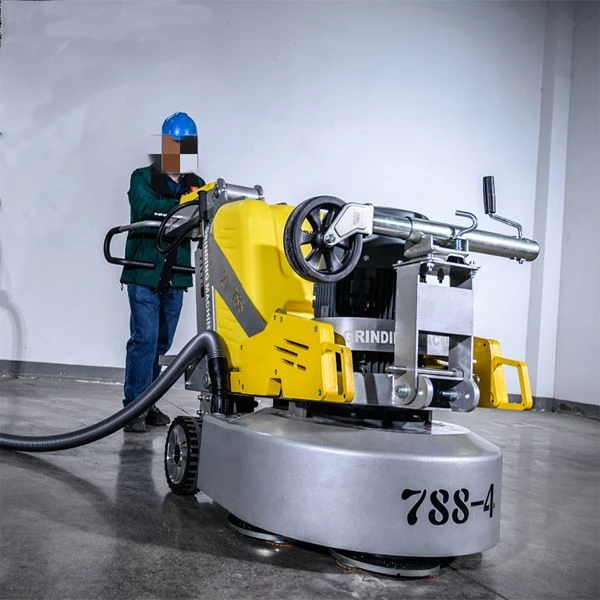
Planetary Concrete Grinder Machines are designed to provide a more uniform and consistent grinding action. They typically have multiple grinding heads that rotate in a planetary motion. Planetary Concrete Grinder Machine models often have a rotation speed for the individual grinding heads in the range of 1000 to 2500 RPM.
The advantage of the planetary motion is that it allows for a more efficient transfer of grinding power to the concrete surface. The linear speed of these grinders can be adjusted based on the hardness of the concrete and the type of grinding tool being used. For general concrete grinding and polishing, a linear speed of 8 to 15 feet per minute is commonly used.
Marble Floor Polishing Machine
Although primarily used for marble floors, Marble Floor Polishing Machines can also be used for certain types of concrete surfaces, especially when a high - gloss finish is desired. Marble Floor Polishing Machine usually operates at a relatively high rotation speed, typically between 2000 and 3500 RPM.
The high rotation speed is essential for achieving a smooth and shiny finish on the floor. However, when using these machines on concrete, the linear speed needs to be carefully controlled. A slower linear speed of around 5 to 10 feet per minute is often recommended to ensure that the grinding and polishing process is thorough and that the desired finish is achieved without causing damage to the concrete surface.
Factors Influencing Grinding Speed
Several factors can influence the optimal grinding speed for a concrete grinder:
Concrete Hardness
Harder concrete surfaces require a slower grinding speed to prevent excessive wear on the grinding discs and to ensure effective material removal. Softer concrete, on the other hand, can tolerate a higher grinding speed, which can increase the efficiency of the grinding process.
Grinding Tool Type
Different grinding tools, such as diamond - impregnated discs, abrasive pads, or wire brushes, have different optimal operating speeds. Diamond discs, for example, are more effective at higher rotation speeds, while wire brushes may work better at lower speeds.
Desired Finish
If a rough surface is acceptable, a higher grinding speed can be used to quickly remove material. However, if a smooth, polished finish is required, a slower grinding speed combined with a series of finer - grit grinding tools is necessary.
Coating or Adhesive Removal
When removing coatings or adhesives from the concrete surface, a higher grinding speed can be beneficial to break down and remove the material more quickly. However, care must be taken not to damage the underlying concrete.
Impact of Grinding Speed on Concrete Grinding Projects
The choice of grinding speed can have a significant impact on the outcome of a concrete grinding project:
Efficiency
Using the appropriate grinding speed can significantly improve the efficiency of the grinding process. A higher speed can cover more area in less time, but only if it is suitable for the concrete surface and the grinding tool. An incorrect speed can lead to excessive tool wear, frequent tool changes, and longer project times.
Quality of Finish
The grinding speed directly affects the quality of the finish. A slower speed with finer - grit tools can produce a smoother, more polished surface, while a higher speed may leave a rougher finish. It is important to match the grinding speed to the desired finish for the project.
Tool Life
Operating the grinder at an incorrect speed can reduce the lifespan of the grinding tools. For example, using a high speed on a hard concrete surface with a tool not designed for it can cause the diamonds in a diamond disc to wear out quickly.
Choosing the Right Grinding Speed
To choose the right grinding speed for your concrete grinding project, consider the following steps:
- Assess the Concrete Surface: Determine the hardness, roughness, and any existing coatings or adhesives on the concrete surface.
- Select the Appropriate Grinding Tool: Choose the grinding tool based on the type of work you need to do, such as material removal, surface leveling, or polishing.
- Refer to the Grinder Manufacturer's Guidelines: The manufacturer of the concrete grinder usually provides recommended grinding speeds for different types of concrete and grinding tasks. Follow these guidelines as a starting point.
- Conduct a Test Area: Before starting the full - scale grinding project, test the grinding speed on a small, inconspicuous area of the concrete surface. Evaluate the results in terms of efficiency, finish quality, and tool wear.
- Make Adjustments as Needed: Based on the test results, adjust the grinding speed to achieve the best results for your project.
Conclusion
In conclusion, the grinding speed of a typical concrete grinder is a crucial factor that can significantly impact the efficiency and quality of your concrete grinding projects. Whether you are using a Self Propelled Concrete Grinder, a Planetary Concrete Grinder Machine, or a Marble Floor Polishing Machine, understanding the factors that influence grinding speed and how to choose the right speed is essential.
If you are in the market for a high - quality concrete grinder or need more information on grinding speeds and techniques, feel free to contact us. Our team of experts is ready to assist you in selecting the best equipment for your project and providing you with the support you need to achieve outstanding results.
References
- Concrete Grinding Handbook, Various Industry Publications
- Manufacturer's Manuals for Concrete Grinders