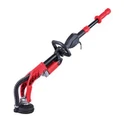
Hey, folks! As a supplier of Hand Held Cement Grinders, I've seen firsthand the challenges that come with using these tools on vertical surfaces. In this blog, I'll share some of the difficulties you might encounter and offer a few tips to help you overcome them.
1. Gravity Is Your Foe
One of the most obvious problems when using a hand - held cement grinder on vertical surfaces is gravity. Unlike when you're working on a flat floor, gravity constantly pulls the grinder downwards. This means you have to use a significant amount of physical effort to keep the grinder in place and moving smoothly along the vertical surface.
For instance, if you're grinding a wall, you need to counteract the downward force all the time. This can quickly lead to fatigue, especially during long - term projects. Your arms and shoulders will start to ache, and it becomes increasingly difficult to maintain a consistent pressure on the grinder. As a result, the grinding quality may suffer, with uneven surfaces and inconsistent results.
2. Dust Management Becomes Tricky
Dust is always an issue when using a cement grinder, but it's even more of a headache on vertical surfaces. On a flat floor, dust tends to settle downwards, and it's relatively easier to collect using a dust collection system. However, when working vertically, the dust doesn't just fall straight down. It can float around in the air for longer periods, and some of it may even stick to the wetter parts of the surface being ground.
This not only makes the working environment dirtier but also poses a health risk to the operator. Inhaling cement dust can cause serious respiratory problems over time. And if the dust isn't properly managed, it can also get into the moving parts of the grinder, potentially causing damage and reducing its lifespan.
3. Maintaining a Consistent Angle
To achieve a smooth and even finish on a vertical surface, you need to maintain a consistent angle with the grinder. But this is no easy feat. Unlike on a flat surface where you can use the floor as a reference, on a vertical wall, there's no natural guide.
If the angle of the grinder changes even slightly, it can lead to uneven grinding. You might end up with some areas being ground too deeply while others are barely touched. This requires a high level of skill and concentration from the operator. Even experienced users can find it challenging to keep the grinder at the right angle throughout the entire grinding process.

4. Limited Mobility and Reach
A hand - held cement grinder has its limitations when it comes to mobility on vertical surfaces. You can't move around as freely as you would on a flat floor. Reaching high or low areas on a wall can be difficult, and you may need to use ladders or other support equipment.
Moving up and down a ladder while holding a heavy grinder is not only inconvenient but also dangerous. There's a risk of losing balance and falling, which can cause serious injuries. Also, the cord or power source of the grinder can get in the way, further restricting your movement.
5. Surface Irregularities Are More Problematic
Vertical surfaces often have more irregularities compared to flat floors. There could be bumps, cracks, or uneven sections. When using a hand - held grinder on these surfaces, these irregularities can cause the grinder to bounce or jerk.
This not only makes the grinding process more difficult but can also lead to an inconsistent finish. The grinder might catch on a bump and cause a scratch or an uneven mark on the surface. You need to be extra careful and make sure to adjust the pressure and speed of the grinder according to the surface conditions.
6. Tool Wear and Tear
Using a hand - held cement grinder on vertical surfaces puts more stress on the tool itself. The constant struggle against gravity means that the motor and other components have to work harder. This can lead to increased wear and tear, reducing the overall lifespan of the grinder.
The grinding discs also wear out faster on vertical surfaces. Since you're constantly pushing the grinder against the surface, the discs are subjected to more friction and pressure. You may need to replace the discs more frequently, which adds to the overall cost of the project.
Tips to Overcome These Difficulties
- Use Proper Body Mechanics: To deal with the problem of gravity, learn to use your body weight to your advantage. Stand in a stable position and use your legs and core muscles to support the weight of the grinder. This can help reduce the strain on your arms and shoulders.
- Invest in a Good Dust Collection System: Look for a dust collection system that is specifically designed for vertical surface grinding. Some models come with adjustable nozzles that can be directed to collect dust more efficiently from vertical surfaces.
- Practice Your Technique: Spend some time practicing on a small, less - visible area to get a feel for maintaining a consistent angle. You can also use a laser level or a straight edge as a guide to help you keep the grinder at the right angle.
- Choose the Right Grinder and Accessories: Make sure you select a hand - held cement grinder that is powerful enough for vertical surface work. Also, consider using grinding discs that are designed for vertical applications. They are often more durable and can provide a better finish.
If you're in the market for a high - quality hand - held cement grinder or any of our other products like the Multifunctional Stone Floor Grinding Machine, Remote Control Concrete Grinder, or Edge Grinding Machine, don't hesitate to get in touch with us. We're here to help you find the best solutions for your grinding needs. Whether you're a professional contractor or a DIY enthusiast, we've got the tools to make your job easier and more efficient. Reach out to us today to start a conversation about your project requirements and let's work together to get the job done right.
References
- "Concrete Grinding Handbook" - A comprehensive guide on concrete grinding techniques and challenges.
- Industry reports on the use of hand - held cement grinders in various applications.