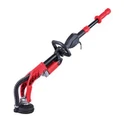
Concrete grinder machines are indispensable tools in the construction and renovation industries, especially when it comes to working on concrete walls. As a supplier of high - quality concrete grinder machines, I have witnessed firsthand the numerous benefits these machines offer, such as surface leveling, removal of coatings, and preparation for further treatments. However, using a concrete grinder machine on concrete walls also presents a set of unique challenges that users need to be aware of.
Dust and Debris Management
One of the most significant challenges when using a concrete grinder on walls is dealing with dust and debris. Concrete grinding generates a large amount of fine dust particles, which can be hazardous to health if inhaled. These dust particles may contain silica, a substance known to cause serious respiratory diseases like silicosis.
To address this challenge, proper dust collection systems are essential. Our company offers concrete grinder machines equipped with advanced dust collection mechanisms. These systems are designed to capture a high percentage of the dust generated during the grinding process. However, even with the best dust collection systems, some dust may still escape. Workers must wear appropriate personal protective equipment (PPE), such as N95 respirators, goggles, and protective clothing, to minimize their exposure to dust.
Another aspect of dust and debris management is the cleanup process. After grinding, there will be a significant amount of debris on the floor and in the surrounding area. This debris needs to be carefully removed to prevent it from being tracked into other areas. Using a high - powered vacuum cleaner specifically designed for construction debris can make the cleanup process more efficient.
Wall Surface Irregularities
Concrete walls are often not perfectly smooth or flat. They may have bumps, depressions, or uneven areas. When using a concrete grinder machine, these irregularities can pose challenges. If the grinder is not adjusted properly, it may cause uneven grinding, leaving some areas over - ground and others under - ground.
To overcome this challenge, operators need to carefully inspect the wall surface before starting the grinding process. They should identify any significant irregularities and mark them. For minor bumps, the grinder can be adjusted to a lower pressure and a slower speed to gradually smooth them out. In the case of larger depressions, additional filler materials may be required to level the surface before grinding.
Our Concrete Floor Grinder is designed with adjustable features that allow operators to adapt to different wall surface conditions. The machine can be adjusted in terms of pressure, speed, and the angle of the grinding head, which helps to ensure a more uniform grinding result.
Machine Mobility and Accessibility
Working on concrete walls requires the machine to be mobile and easily maneuverable. Unlike working on a flat floor, where the machine can move freely in all directions, wall grinding often involves working in confined spaces and at different heights.
Moving the concrete grinder machine vertically along the wall can be physically demanding. Operators need to ensure that the machine is securely attached to a suitable lifting device or scaffolding to prevent it from falling. In addition, the power cord or hose of the machine may get in the way, limiting the machine's mobility.
To improve machine mobility, our company has developed lightweight and compact concrete grinder machines. These machines are easier to move and handle, even in tight spaces. We also offer accessories such as long - reach handles and extension cords to increase the machine's accessibility.
Noise Pollution
Concrete grinder machines are notoriously noisy. The high - speed rotation of the grinding discs and the impact on the concrete surface generate a significant amount of noise. Prolonged exposure to high - level noise can cause hearing damage to operators and also be a nuisance to people in the surrounding area.
To reduce noise pollution, our concrete grinder machines are equipped with noise - reducing features. These include sound - insulating materials in the machine's housing and advanced motor designs that operate more quietly. However, operators should still wear hearing protection devices, such as earplugs or earmuffs, to further protect their hearing.
Blade Wear and Replacement
The grinding blades of a concrete grinder machine are subject to significant wear and tear during the wall - grinding process. The hardness of the concrete and the constant friction can cause the blades to become dull over time. Dull blades not only reduce the efficiency of the grinding process but also increase the risk of uneven grinding.
Regular inspection of the blades is crucial. Operators should check the blades for signs of wear, such as chipping, cracking, or reduced sharpness. When the blades reach a certain level of wear, they need to be replaced promptly. Our company offers a wide range of high - quality replacement blades that are designed to fit our concrete grinder machines.
Operator Skill and Training
Using a concrete grinder machine on concrete walls requires a certain level of skill and training. Operators need to understand how to operate the machine safely, adjust it according to different wall conditions, and manage the various challenges mentioned above.
Lack of proper training can lead to inefficient grinding, damage to the wall surface, and even accidents. We provide comprehensive training programs for our customers to ensure that their operators are well - equipped with the necessary skills and knowledge. These training programs cover machine operation, safety procedures, maintenance, and troubleshooting.
Power Supply and Mobility
Concrete grinder machines require a reliable power supply. When working on walls, especially in large construction sites, ensuring a continuous power supply can be a challenge. Extension cords may be required, but they need to be of the appropriate length and gauge to avoid power loss.


Moreover, the length of the power cord can limit the mobility of the machine. To address this issue, some of our concrete grinder machines are available in battery - powered models. These battery - powered machines offer greater mobility and flexibility, allowing operators to work in areas where a power outlet is not readily available.
Cost Considerations
Using a concrete grinder machine on concrete walls also involves cost considerations. The initial investment in a high - quality concrete grinder machine can be significant. In addition, there are ongoing costs such as blade replacement, maintenance, and power consumption.
However, it is important to note that investing in a good - quality machine can lead to long - term cost savings. High - quality machines are more durable, require less frequent maintenance, and offer better performance, which can increase productivity and reduce the overall cost of the project.
Conclusion
In conclusion, using a concrete grinder machine on concrete walls presents several challenges, including dust and debris management, wall surface irregularities, machine mobility, noise pollution, blade wear, operator skill, power supply, and cost. As a supplier of Concrete Grinder Machine, we understand these challenges and are committed to providing solutions to help our customers overcome them.
Our range of concrete grinder machines, including Wood Floor Sander Machine and Concrete Edge Grinder, are designed with advanced features to address these challenges. We also offer comprehensive training and support services to ensure that our customers can use our machines safely and efficiently.
If you are facing challenges in using concrete grinder machines on concrete walls or are looking to purchase a high - quality machine, we invite you to contact us for a consultation. Our team of experts is ready to assist you in finding the best solution for your specific needs.
References
- Construction Equipment Guide: "Best Practices for Concrete Grinding"
- Occupational Safety and Health Administration (OSHA): "Silica Dust Exposure in Construction"
- Machinery Lubrication: "Maintenance of Concrete Grinder Machines"