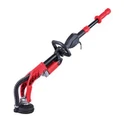
Is it easy to transport a portable concrete grinder? This is a question that often pops up among contractors, DIY enthusiasts, and various construction professionals. As a trusted supplier of portable concrete grinders, I've witnessed firsthand the considerations and challenges related to transporting these essential tools. In this blog, I'm going to share my insights, discuss the ease or complexity of transporting portable concrete grinders, and provide some practical tips.
Understanding Portable Concrete Grinders
First, it’s important to understand what a portable concrete grinder is. These machines are designed to be, well, portable. They come in various types and models, each with its own set of features and functions. For instance, we offer the Four Discs Concrete Grinder, which is known for its efficient grinding operation with four grinding discs. Another popular model is the Diamond Blade Concrete Grinder, equipped with high - quality diamond blades for tough concrete surfaces. And the Levelling Floor Grinder Machine is specifically designed for levelling uneven concrete floors.
Portable concrete grinders are generally more convenient than their larger, stationary counterparts. They are lighter, more compact, and easier to move around a job site. However, when it comes to transporting them from one job site to another, such as across town or even to a different city, there are still factors to consider.
Factors Affecting the Transport of Portable Concrete Grinders
Size and Weight
Although “portable” implies easy to move, the size and weight of these grinders can vary significantly. Some smaller models may weigh as little as 50 kilograms, while larger, more powerful ones can exceed 200 kilograms. The weight directly impacts how easy it is to lift the grinder into a vehicle. For example, a single person may be able to handle the lighter models with relative ease, but heavier ones may require a team or the use of lifting equipment like a forklift.
In terms of size, the dimensions of the grinder need to fit within the available transport space. A grinder with a large footprint or an awkward shape can be difficult to load into a pickup truck or van. It may require specific positioning or even some disassembly in extreme cases.
Durability and Fragility
Portable concrete grinders are built to withstand the rigors of concrete grinding, but they are also made up of numerous components that can be damaged during transport. The grinding discs, motors, and control panels are all vulnerable parts. These components need to be protected to ensure the grinder remains in working condition after transportation. For example, the diamond blades on a Diamond Blade Concrete Grinder are expensive and fragile. If they are not properly secured, they can chip or break during transit, which will not only affect the performance of the grinder but also result in costly replacements.
Vehicle Compatibility
The type of vehicle used for transportation is a crucial factor. A van or a pickup truck with a flatbed can be suitable for most portable concrete grinders. However, loading and unloading can be a challenge depending on the height of the vehicle bed. For instance, if the vehicle is very high off the ground, it may be difficult to lift the grinder onto the bed without proper equipment.
Moreover, the vehicle needs to have enough space to accommodate the grinder safely. If the grinder is not properly secured, it can shift during transit, causing damage to the machine itself or the vehicle interior. In some cases, a trailer may be a better option, especially for larger grinders or when transporting multiple units at once.
Tips for Transporting Portable Concrete Grinders
Preparation
Before transporting the grinder, it’s essential to conduct a thorough inspection. Check for loose parts and tighten any bolts or screws. Drain the fuel tank if it’s a gas - powered grinder to prevent spills during transit. Disconnect any power cords or hoses, and store them separately to avoid damage.
If the grinder has removable parts such as grinding discs or handlebars, consider removing them. This can make the grinder more compact and easier to handle. For example, the grinding discs on the Four Discs Concrete Grinder can be detached, which reduces the overall size and weight during transportation.


Packaging
Invest in good - quality packaging materials. Wrap the grinder in protective padding such as foam or bubble wrap to prevent scratches and dents. Use sturdy boxes or crates for storage, especially if multiple grinders are being transported together. Secure the packaging with straps or ropes to ensure it stays intact during the journey.
Securing in the Vehicle
Once the grinder is in the vehicle, use straps or tie - downs to secure it firmly. Place the grinder in a stable position, preferably on a flat surface. Avoid stacking heavy items on top of the grinder, as this can cause damage. If using a trailer, make sure the grinder is centered and balanced to prevent the trailer from tipping during transit.
Is it Easy? The Verdict
Overall, transporting a portable concrete grinder can be relatively easy if you take the necessary precautions. The portability of these machines gives them an edge over larger, fixed - in - place equipment. However, it’s not without challenges. The size, weight, and fragility of the grinder can make the transportation process more complicated.
In most cases, with proper planning, preparation, and packaging, a skilled individual or a small team can successfully transport a portable concrete grinder. Whether it’s a short - distance move across a job site or a long - haul journey to a new location, following the right procedures can ensure the grinder arrives safely and in good working condition.
Contact Us for Your Portable Concrete Grinder Needs
If you're in the market for a high - quality portable concrete grinder, we're here to help. Our range of products, including the Four Discs Concrete Grinder, Diamond Blade Concrete Grinder, and Levelling Floor Grinder Machine, is designed to meet the diverse needs of our customers. We offer reliable products, excellent customer service, and competitive prices. If you have any questions or would like to discuss your specific requirements, please don't hesitate to reach out to us. We look forward to partnering with you for your next project.
References
- Concrete Construction Manual, National Ready Mixed Concrete Association
- Handbook of Construction Equipment, McGraw - Hill Education