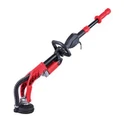
Hey there! As a supplier of Concrete Floor Sanders, I've seen a lot of folks scratching their heads when it comes to choosing the right one. It's not as simple as just picking any old machine off the shelf. There are a bunch of factors you need to consider to make sure you get the perfect fit for your project. In this blog, I'm gonna walk you through the whole process step by step.
Understanding Your Project
First things first, you gotta understand the scope of your project. Are you working on a small residential garage floor or a massive commercial warehouse? The size of the area you need to sand is a huge factor. For smaller areas, you might be able to get away with a handheld or a smaller, more maneuverable sander. But for larger spaces, you'll probably want a bigger, more powerful machine that can cover more ground quickly.
Let's say you're sanding a small basement floor. A handheld sander could be a great option. It's easy to control, and you can get into tight corners and edges with ease. On the other hand, if you're working on a large industrial floor, a walk-behind sander would be more suitable. It has the power and the width to make quick work of a big area.
Another thing to think about is the condition of the concrete. Is it relatively smooth, or is it rough and uneven? If the floor has a lot of bumps, dips, or rough patches, you'll need a sander that can handle the heavy lifting. A Levelling Floor Grinder Machine might be a good choice in this case. It's designed to level out uneven surfaces and can remove a significant amount of material.
Types of Concrete Floor Sanders
There are several types of concrete floor sanders out there, and each one has its own strengths and weaknesses. Let's take a look at some of the most common types:
Rotary Sanders
Rotary sanders are one of the most popular types of concrete floor sanders. They work by spinning a sanding pad or disc in a circular motion. These sanders are great for general sanding and smoothing of concrete surfaces. They're relatively easy to use and can be found in a variety of sizes.
One of the advantages of rotary sanders is that they're versatile. You can use different grits of sanding pads to achieve different levels of smoothness. For example, if you're just starting out and need to remove a lot of material, you can use a coarse grit pad. Then, as you get closer to your desired finish, you can switch to a finer grit pad.
However, rotary sanders do have some limitations. They're not as effective at removing deep scratches or leveling uneven surfaces as some other types of sanders. If you have a floor with significant damage, you might need to consider a different option.
Orbital Sanders
Orbital sanders work by moving the sanding pad in a random orbital motion. This motion helps to prevent swirl marks and gives a more consistent finish. Orbital sanders are often used for finishing work and are great for getting a smooth, polished look.
One of the benefits of orbital sanders is that they're less aggressive than rotary sanders. This means they're less likely to damage the concrete surface. They're also relatively quiet and easy to control, making them a good choice for small projects or for working in areas where noise is a concern.
But like rotary sanders, orbital sanders have their limitations. They're not as powerful as some other types of sanders and might not be suitable for heavy-duty sanding or leveling.
Planetary Sanders
Planetary sanders are a more advanced type of concrete floor sander. They have multiple sanding discs that rotate in a planetary motion. This design allows for more even sanding and faster material removal.


Planetary sanders are great for large-scale projects and for sanding rough or uneven surfaces. They can handle a wide range of grits and can be used for both coarse and fine sanding. However, they're also more expensive and more complex to operate than other types of sanders.
Four Discs Concrete Grinder
A Four Discs Concrete Grinder is a powerful machine that uses four rotating discs to sand and grind concrete surfaces. It's designed for heavy-duty applications and can remove a large amount of material quickly.
This type of grinder is ideal for large commercial or industrial projects where speed and efficiency are important. It can handle rough and uneven surfaces with ease and can be used with a variety of grinding and sanding attachments.
Power and Performance
When choosing a concrete floor sander, you also need to consider the power and performance of the machine. The power of a sander is usually measured in horsepower (HP). Generally, the higher the horsepower, the more powerful the sander and the faster it can sand the concrete.
However, horsepower isn't the only factor to consider. You also need to look at the torque and the speed of the sander. Torque is the force that allows the sander to turn the sanding pad or disc. A sander with high torque can handle tough jobs and can prevent the motor from stalling.
The speed of the sander is also important. Different types of sanding require different speeds. For example, when you're using a coarse grit pad to remove a lot of material, you might want a slower speed. But when you're using a fine grit pad for finishing work, a higher speed might be more appropriate.
Dust Collection
Dust collection is another important consideration when choosing a concrete floor sander. Sanding concrete creates a lot of dust, which can be harmful to your health if inhaled. A good dust collection system is essential to keep the air clean and to protect your lungs.
Most modern concrete floor sanders come with a built-in dust collection system. These systems use a vacuum to suck up the dust as you sand. Some dust collection systems are more effective than others, so it's important to look for a sander with a high-quality system.
You also need to consider the size and capacity of the dust collection bag or container. If you're working on a large project, you'll need a system with a large capacity so you don't have to empty it too often.
Edge Sanding
Don't forget about edge sanding! When you're sanding a concrete floor, you'll need to sand the edges as well. This can be a tricky task, especially if you're using a large sander.
A Concrete Edge Grinder is designed specifically for sanding the edges of concrete floors. It's a small, handheld machine that can get into tight spaces and corners. Using an edge grinder can help you achieve a more professional-looking finish and ensure that the entire floor is sanded evenly.
Cost and Budget
Of course, cost is always a factor when making a purchase. Concrete floor sanders can range in price from a few hundred dollars to several thousand dollars. The price of a sander depends on a variety of factors, including the type, size, power, and features of the machine.
It's important to set a budget before you start shopping for a sander. Consider how often you'll be using the sander and what type of projects you'll be working on. If you're only going to be using the sander occasionally for small projects, you might be able to get away with a less expensive model. But if you're a professional contractor or if you'll be using the sander on a regular basis, it might be worth investing in a higher-quality, more expensive machine.
Conclusion
Choosing the right concrete floor sander can be a challenging task, but it doesn't have to be. By considering the factors I've discussed in this blog, you can make an informed decision and find the sander that's perfect for your project.
If you have any questions or need more information about our Concrete Floor Sanders, don't hesitate to reach out. We're here to help you choose the right machine and to ensure that your project is a success. Whether you're a DIY enthusiast or a professional contractor, we have the products and the expertise to meet your needs. Contact us today to start the conversation and let's find the perfect sander for you!
References
- Concrete Floor Sanding Basics. Home Improvement Journal.
- Choosing the Right Power Tools for Concrete Work. Construction Magazine.