Hey there! As a supplier of wood floor sander machines, I often get asked a bunch of questions from our customers. One question that pops up quite a bit is, "Can I reuse the sandpaper from a wood floor sander machine?" Well, let's dig into this topic and find out the ins and outs.
First off, let's talk about how sandpaper works in a wood floor sander machine. Sandpaper has abrasive particles on its surface. When you use it with a sander, these particles rub against the wood floor, removing the top layer, smoothing out rough spots, and prepping the floor for staining or finishing.
Now, the big question - can you reuse it? The answer isn't a simple yes or no. It depends on a few factors.
Condition of the Sandpaper
The most obvious factor is the condition of the sandpaper itself. After a single use, the abrasive particles on the sandpaper can wear down. They might get clogged with wood dust, or some particles could even break off. If the sandpaper looks really worn out, with lots of the abrasive gone or large clumps of dust stuck to it, it's probably not going to be very effective if you try to reuse it.
For example, if you've been sanding a really rough or hard - wood floor, the sandpaper will take a beating. The abrasive will wear away faster, and it'll get clogged more easily. In this case, reusing it might lead to an uneven sanding job, leaving some areas of the floor rougher than others.
On the other hand, if you've only used the sandpaper for a short time on a relatively smooth floor, it might still have some life left in it. You can take a close look at the sandpaper. If the abrasive particles still look sharp and there's not too much dust clogging them, you could give it a second go.
Type of Sanding Job
The type of sanding job also matters. There are different stages of sanding a wood floor. The initial sanding, also known as the coarse sanding, is used to remove the old finish and level out any high spots on the floor. You usually use a coarse - grit sandpaper for this. After that, you move on to finer - grit sandpapers for a smoother finish.
If you're reusing sandpaper from the coarse sanding stage for another coarse sanding job, it might work okay. But if you try to reuse a coarse - grit sandpaper that's already been used for the finer sanding stage, it'll probably be too worn out to give you a good result.
Let's say you've just done a light sanding to refresh a floor that already had a smooth finish. The sandpaper might not be too damaged, and you could potentially reuse it for a similar light - sanding job. However, if you're planning to sand a brand - new floor that's really rough, you're better off using fresh sandpaper.
Cleaning the Sandpaper
If you want to reuse sandpaper, cleaning it can make a big difference. Wood dust can clog the abrasive particles, reducing the sandpaper's effectiveness. You can try using a sandpaper cleaner or a stiff brush to remove the dust. There are also special tools called sandpaper rejuvenators that can help unclog the sandpaper.
But be careful when cleaning. Some cleaning methods can actually damage the sandpaper. For example, using too much water or a harsh chemical cleaner might cause the paper backing to warp or the adhesive holding the abrasive particles to break down.
Benefits of Reusing Sandpaper
If you can reuse sandpaper, there are some benefits. First of all, it saves you money. Buying new sandpaper for every single sanding job can add up quickly, especially if you're doing a large - scale project. Reusing also helps reduce waste. In today's world, being environmentally friendly is important, and reusing materials is a great way to do that.
Drawbacks of Reusing Sandpaper
However, there are also some drawbacks. As I mentioned earlier, reused sandpaper might not give you a consistent sanding result. It could leave your floor looking uneven, with some areas smoother than others. This can be a real problem, especially if you're aiming for a professional - looking finish.
Another drawback is that reusing sandpaper might take longer. Since the abrasive particles are worn down, it'll take more passes over the floor to achieve the same level of sanding as you would with fresh sandpaper. This means more time and effort on your part.

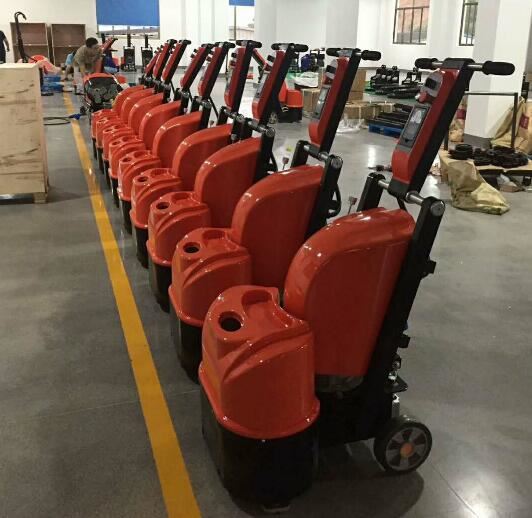
Now, as a supplier of wood floor sander machines, we also offer a range of other floor - related machines. If you're interested in other types of floor work, check out our Terrazzo Tile Polishing Machine, Levelling Floor Grinder Machine, and Multifunctional Stone Floor Grinding Machine. These machines are great for different types of floor materials and projects.
In conclusion, reusing sandpaper from a wood floor sander machine is possible, but it depends on the condition of the sandpaper, the type of sanding job, and how well you clean it. If you're not sure whether your sandpaper is reusable, it's always a good idea to test it on a small, inconspicuous area of the floor first.
If you're in the market for a wood floor sander machine or any of our other floor - related equipment, don't hesitate to reach out for a purchase negotiation. We're here to help you find the right tools for your project and answer any other questions you might have.
References
- "Wood Floor Sanding Basics" - Wood Flooring Association
- "The Science of Abrasives" - Abrasive Materials Journal