


Why Choose Us
Reliable Product Quality
We have strict quality control system and has passed CE certificate for all machines.
OEM & ODM Available
We can do OEM and ODM for your requirements with our own production bases and some well cooperation partners.
Wide Product Range
We have exported our machines to many countries with good reputation.
Professional Technical Team
We can quickly and effectively solve the problems for the machine with experienced technician and professional sales.
What is Three Phases Industrial Vacuum Cleaner?
Three phases industrial vacuum cleaners are tools used in various industries to remove dust, material residues and other wastes from manufacturing and processing processes. They are capable of high suction performance, strength and durability due to their ability to handle large volumes of air and their robust and reliable construction. The side channel blower with which they are equipped allows for maintenance-free operation in continuous service, and the vacuum breaker valve prevents overpressure and overheating, ensuring their performance and durability.
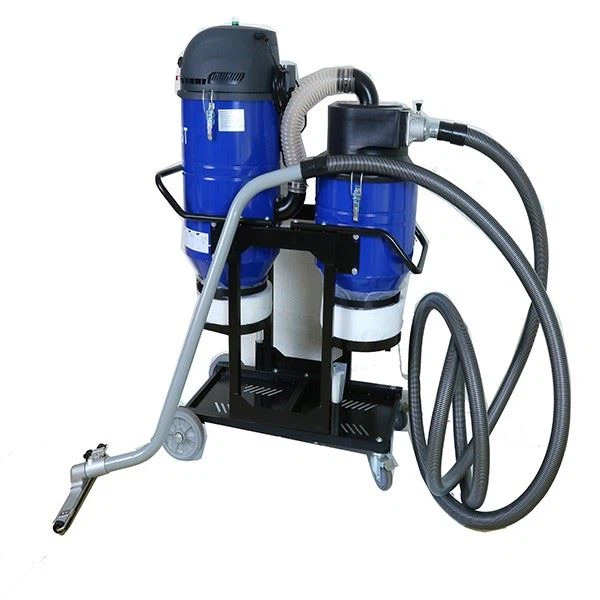
Cyclone Separator Industrial Vacuum Cleaner
A Cyclone Separator Industrial Vacuum Cleaner is a highly efficient cleaning tool designed for industrial environments that require the management of large amounts of dust and debris. This type of vacuum cleaner utilizes cyclone separation technology to enhance performance, durability, and efficiency.

Single Phase Industrial Vacuum Cleaner
Single Phase Industrial Vacuum Cleaner is essential tools in various industrial environments for maintaining cleanliness and ensuring efficient operations. They are designed to handle heavy-duty cleaning tasks in settings such as workshops, factories, and warehouses.
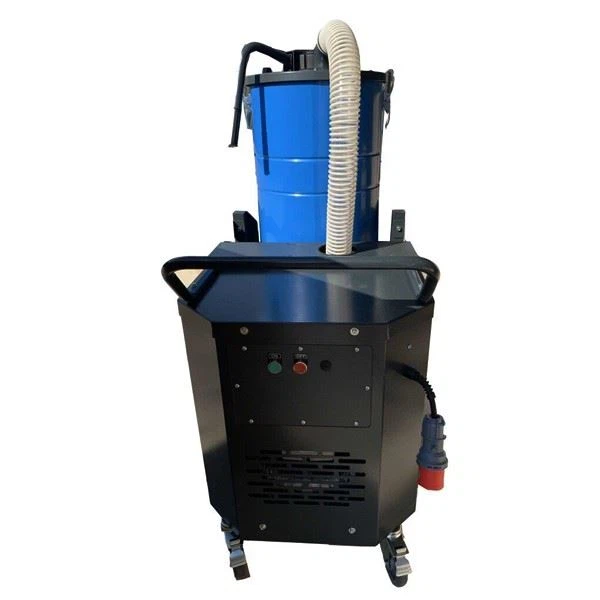
Three Phases Industrial Vacuum Cleaner1.Power system adopts high vacuum turbine motor, wide voltage and double frequency,can work 24 hours non stop 2.equipped with schneider electronic components, have overload, overheating, short circuit protection 3.Continuous drop down plastic bag, easy to load and handle dust 4.
Powerful Cleaning
You can get a powerful cleaning experience with a heavy duty three phases industrial vacuum cleaner. They have high-powered motors. As a result, you can get powerful suction capabilities. They also have robust filtration systems. These vacuum cleaners can collect and remove debris. Vacuuming a large area with such a heavy-duty vacuum cleaner takes less time.
Better Productivity and Efficiency
Saving time is quite important in industrial settings. This is another benefit that industrial cleaning equipment can offer. With a larger capacity and powerful suction, you can save a lot of time. This will reduce the cleaning time. It can also improve the productivity of the industrial facility.
Better Air Quality
Industrial facilities usually have dust and airborne particles. But, working in such an environment can be hazardous. That's where you need to clean the air with the help of a vacuum cleaner. It comes with an advanced filtration system. As a result, you can get an three phases industrial vacuum cleaner to trap harmful particles. This will help you to improve air quality. If you want to stick to strict cleanliness standards, you can stick to such a vacuum cleaner.
Safety and Compliance
The industrial facilities have to adhere to stringent safety regulations. This ensures workplace safety. Industrial workers can operate the vacuum cleaner without any safety risks. A vacuum cleaner is a valuable tool available to clean spills and debris. Even if there is a need to clean hazardous materials, it can be useful. By keeping a clean workplace, the three phases industrial vacuum cleaner delivers a safer work environment. This will help the facilities to meet regulatory compliance requirements.
Versatile and Adaptable
The industrial hygiene vacuum cleaner is versatile and adaptable as well. For example, the three phases industrial vacuum cleaner comes with many configurations. You need to switch to the right configuration based on your cleaning needs. No matter what, you can get a vacuum cleaner to help you with many cleaning tasks. For example, you can use the cleaner to reach high ceilings or large floor areas. You may also use it to extract liquids. This will help you to stay away from buying many cleaning tools.
Durable
All three phases industrial vacuum cleaners are more durable than ordinary vacuum cleaners. They come with different configurations to suit the cleaning needs. You can find robust construction in the three phases industrial vacuum cleaner. The durable materials will make sure that you don't have to look for a vacuum cleaner soon. The design is capable of accommodating rigorous industrial cleaning tasks. Hence, it will be a cost-effective investment for your industrial facility.
Cost Savings
You can experience long-term cost savings with the industrial vacuum system. They are more durable than ordinary vacuum cleaners. This will keep you away from frequent repairs and replacements. You can also get better productivity and efficiency. It helps you with saving valuable time and labour expenses.
Application of Three Phases Industrial Vacuum Cleaner
Agriculture
Farmers have faced the challenge of dust from grain and livestock feed cultivation for centuries. Although it may appear harmless, this dust is highly flammable and volatile, posing significant ignition risks. Explosion-proof three phases industrial vacuum cleaners, whether air or electrically powered, are specifically designed to safely collect and remove this dust, mitigating the threat of fires and explosions in agricultural settings.
Automotive
In the automotive industry, paints and coatings are essential for protecting products during production. When changing over paint types or finishing processes, it's crucial to manage the residue and overspray left in the paint booths. To effectively handle this, three phases industrial vacuum cleaners equipped with highly efficient filtration systems are used to recover and manage these materials, ensuring a clean and safe environment while minimizing waste and contamination.
Aviation Production
Similar to the automotive industry, the aviation industry also involves the extensive use of powders and paints in aircraft assembly. Aircraft production often takes place in clean rooms, which necessitate the use of HEPA filters and high-performance three phases industrial vacuum cleaners to maintain stringent cleanliness standards. Additionally, before an aircraft is delivered, it undergoes a thorough cleaning process, frequently utilizing backpack portable three phases industrial vacuum cleaners to ensure every surface is pristine and free of contaminants.
BBeverage
In the beverage industry, spill recovery is crucial for maintaining safety and hygiene standards. Three phases industrial vacuum cleaners with high static lift capabilities are specifically designed to handle a wide range of liquids, ensuring effective spill management. The industry's strict government regulations concerning safety, hygiene, and cleanliness have driven the need for highly efficient and reliable vacuum cleaners to manage spills and maintain a clean production environment.
Chemical
In the chemical industry, hazardous conditions frequently pose risks to workers due to exposure to toxic and harmful substances. Three phases industrial vacuum cleaners play a crucial role in this sector by aiding in product recovery, maintenance, and packaging. They are also essential for safely transferring products and maintaining a clean and safe work environment. These vacuums are designed to handle and contain hazardous materials effectively, helping to prevent accidents and ensure compliance with safety regulations.
Healthcare
In the healthcare industry, maintaining exceptional cleanliness and contaminant-free environments is crucial for patient safety and staff well-being. three phases industrial vacuum cleaners equipped with HEPA filters are essential for achieving these high standards. They effectively clean and remove harmful dirt, bacteria, and other contaminants, minimizing the risk of infection. Unlike common vacuum cleaners, industrial models with HEPA filters prevent the spread of airborne infectious substances, ensuring a safer and more sterile environment.
Mining
The mining industry faces significant challenges with dust, which is flammable, volatile, and highly concentrated in enclosed environments. To address these issues, three phases industrial vacuum cleaners with high static lift are essential. These vacuums are designed to effectively recover dust and manage liquids used in mining operations, ensuring a safer and cleaner working environment.
Plastics
In plastics production, small round resin pellets are the primary ingredient. These pellets are melted and shaped into plastic products. During manufacturing, the pellets are fed into the production process through hoppers. Effective recovery of spilled pellets is crucial for cost efficiency and inventory management.
Motor unit
Consisting of side channel blower or centrifugal fan, the motor unit is basically the heart that enables the vacuum cleaner to function. This key component is defined according to the performance desired. Basically, the customer describes the type of work for which they need the vacuum cleaner, the type of material to be suctioned, and the distance to the suction point. Based on this data, our technicians define the air flow, depression, and power of the vacuum cleaner, choosing the most suitable configuration for the use.
Filter chamber
This is the place where the filter is housed. Among the most important parts of the whole vacuum cleaner, the main filter is used to retain even the smallest particles of suctioned material, to leave the working environments clean and in safe conditions for the health of the operators. The type of filter is determined according to the type of material to be suctioned and, more specifically, according to the dust classification regulated by IEC 60335-2-69.
Collection container with release lever
This component is used to collect the suctioned material. The capacity of the collection container is decided on the basis of the customer's specific vacuuming needs: it ranges from a minimum of 38 liters to a maximum of 1160 for custom models, with even the possibility of continuous discharge and thus continuous capacity. In addition, they can be equipped with PVC bag kits so that the vacuumed material can be disposed of in collection bags and thus in a more easy and healthy way for the operator.
Silenced exhaust
When a three phases industrial vacuum cleaner is turned on, what causes noise is the movement of large amounts of air, which, colliding against the vacuum's sheet metal, causes friction and noise. To dampen this noise, three phases industrial vacuum cleaners have silenced exhausts, which are sheet metal elements coated with sound-absorbing material that dampens the sound of clean air coming out of the vacuum cleaner.
Suction nozzle for hose connection
The suction manifold, located on the vacuum cleaner body, is the inlet point to which the suction hose is attached. However, they can be customized through reduction joints to adapt the diameters to the customer's specific needs.
Control panel
The control panel is the element through which the entire vacuum cleaner is operated. In addition to the start and stop switch, there are other functions that regulate the operation of the vacuum cleaner. For example, you can schedule filter cleaning or you can set the vacuum cleaner to start at the same time as the machinery to which it is connected.
Usage Methods of Three Phases Industrial Vacuum Cleaners
Because the three phases industrial vacuum cleaner itself generates heat when running, in order to avoid machine failure due to overheating, industrial vacuum for dust should be used in an environment where the ambient temperature does not exceed 40℃, and try to ensure good ventilation without inhaling flammable and explosive objects and without flammable and corrosive gases in the environment air.
Different manufacturers, brands, and specifications of three phases industrial vacuum cleaners have different structural performance and functional characteristics. Therefore, before using industrial vacuum cleaners, we need to carefully read the instructions, avoid pitfalls, so as not to cause unnecessary damage and personal safety problems due to improper use.
Before using this type of industrial dust removal equipment, the plug needs to be connected with the ground wire to ensure electrical safety. Before use, confirm the length of time the industrial vacuum cleaner works. If it is a 220V carbon brush light industrial vacuum for dust, do not use it for more than 4 hours. After working continuously for four hours, rest for half an hour and then work. If there are special circumstances that require continuous work, do not exceed 8 hours of use time or rotate several motor wheels to achieve the effect of long-term continuous work, allowing the motor to have a rest time.
Before the dust removal work, make sure to fix the vacuum cleaner, press the brake of the wheel, prevent the machine from deviating during operation, then connect the hose and dust suction port. The hose should not be bent, folded, or otherwise obstructed, to avoid poor air intake.
Three phases industrial vacuum cleaners cannot suck up everything. If the garbage that needs to be cleaned contains long and large objects that can easily block in the scraper or hose, please manually remove them first, and then use the industrial dust vacuum cleaner to suck up the small things to avoid trouble.
If there is liquid to be sucked in the venue, please remove the industrial vacuum for dust filter and dust separator first before sucking. Otherwise, the liquid will get on the filter and dust separator, and in subsequent dust removal, the dust will adhere to the damp filter and dust separator, causing serious blockage. When filtering the air, the damp gas will be brought into the motor, causing a series of problems such as motor rusting.
Common Three Phases Industrial Vacuum Cleaner Problems
A Lack of Suction
If you note that the unit has begun to shows signs of low suction (or if it has ceased entirely), the chances are high that this is due to a clogged air filter. Remove the filter and check for any debris. It could also be necessary to replace the filter entirely.
A Broken Internal Belt
Drive belts are under a great deal of pressure and these are the mechanisms which allow the scrubbing brushes to rotate. It therefore makes sense that a belt could snap on occasion. Symptoms may include the smell of burning rubber or a scrubbing head that has suddenly stopped rotating.
Scrubbing Brushes that Fail to Spin
Although a broken belt can cause this problem, the brushes themselves may also have become jammed. After the unit is powered down, examine these heads and make sure that no debris (such as hair or twine) is impeding their motion. Briefly scrutinise the brush roll assembly to ensure that no bearings have become lost or damaged.
A Weak or Inoperative Motor
There are several reasons behind this situation. The electronic control board (known as the PCB) may have become damaged. The mains fuse may have tripped due to a perceived overload. Broken drive or cog belts can also cause an engine to cease. Any of these scenarios should be diagnosed by a trained professional.
How to Clean & Maintain Your Three Phases Industrial Vacuum Cleaner
Empty the Dust Container or Bag Regularly
Three phases industrial vacuum cleaners are designed to work with large amounts of dirt and dust, so it's essential to empty the dust container or bag regularly for maximum efficiency. Depending on how often you use your industrial vac, how much debris it picks up, etc., this may need to be done daily. Wear gloves when handling dirt and debris in the container or bags; they may contain hazardous particles like asbestos that can be dangerous if inhaled or mishandled. Vacuum bags need to be replaced when they're full or damaged. If you're using a disposable bag, throw the filter bag away and replace it with a new one. The dust bag should be replaced periodically, as well.
Check Hoses for Clogs Frequently
Besides maintaining the motor and cleaning it occasionally, it's also a good idea to keep an eye out for clogs and blockages in the hose and the bin. Generally speaking, central vacuums are easier to check for clogs and blockages since you can remove the bin. On the other hand, canister vacuums are more challenging to check for clogs and blockages since you have to remove the hose to gain access to the bin. Remove the lid and debris with a long-handled tool if the bin is jammed. If the hose is clogged, you may need to remove the hose from the vacuum, use a long-handled tool and try to dislodge the obstruction. If a clog is causing the vacuum to lose power, you may also notice a rise in temperature as the motor strains to run.
Clean Filters Regularly
A vacuum's filters are often the first components to get clogged, which is essential to maintaining good performance over time. To help guard against filter clogs and blockages, you should regularly check the filters in your vacuum to see if there is any sign of wear or damage. Some filters may need to be replaced after a certain amount of use, while others can be cleaned and reused. If a filter is torn or broken, it may need to be replaced; otherwise, it may tear off inside the vacuum, causing even more damage. If a filter clogs due to normal wear and tear, you can try rinsing it out to remove any excess dirt and dust. If a filter becomes heavily clogged, it may need to be replaced.
Clean the Barrel and Wash the Filter
It would be best if you regularly cleaned the barrel of your vacuum to prevent dirt from getting trapped inside. It's also a good idea to wash the filter periodically. When the filter begins to collect dust and dirt, it can hinder the vacuum's performance. Removing dirt and dust from the filter can extend the life of your vacuum and help reduce maintenance costs. Washing the filter regularly can significantly extend the life of your vacuum and reduce maintenance costs. You may also want to remove and clean the belt from time to time. Dirt and other debris can accumulate on the belt's surface, which can eventually cause the belt to become sticky or stiff.
Check for Any Loose or Broken Parts and Repair Them if Necessary
Loose parts can cause damage to other components, reduce suction power, and lead to unnecessary wear on the machine itself. Tighten up any screws or bolts that are loose; if anything is broken, it may need to be replaced for your industrial vac to continue functioning properly. Three phases industrial vacuum cleaners have a variety of parts and components that need to be maintained for them to run at peak performance.
Our Certifications


Rockbest machinery is famous brand for concrete floor surface preparation machines in China, we always put product quality and customer service first, we have independent research and production plants for concrete grinder, concrete scarifier and concrete shot blaster machine in coastal cities for convenient transportation and excellent supply chain. We will always engage in floor industry and create more valuable products for customer.
Ultimate FAQ Guide to Three Phases Industrial Vacuum Cleaner
Hot Tags: three phases industrial vacuum cleaner, China three phases industrial vacuum cleaner manufacturers, suppliers, factory, floor machine dust extractor


