


What is Lavina Diamond Grinding Block
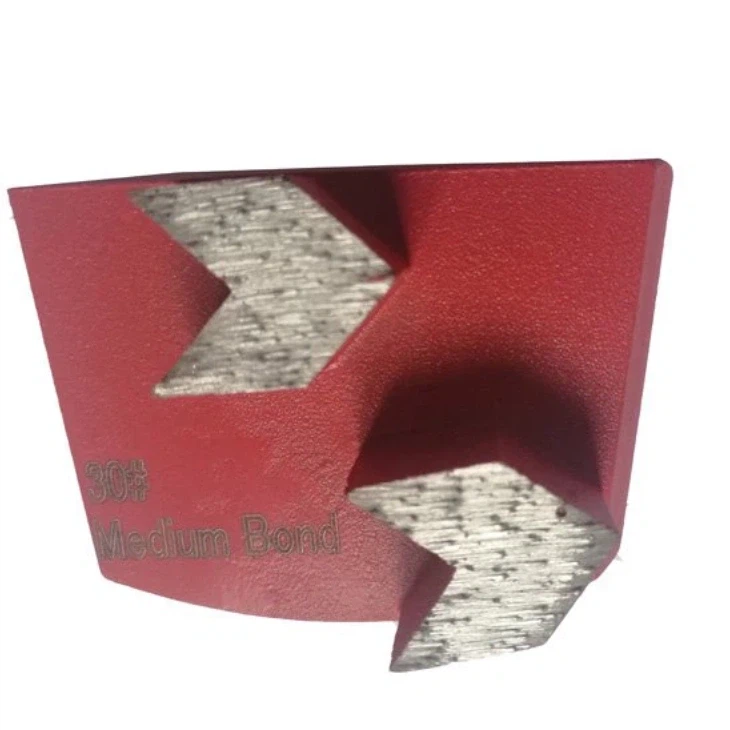
Lavina Diamond Grinding Blocks are tools used for concrete grinding, coating removal, and polishing: This tool is designed for concrete surface preparation, polishing, and coating removal. It features a 50 grit metal bond diamond and a circle button segment to minimize scratches and gouges.
Why Choose Us
Famous Brand
With 30 years of production technology, our famous floor machine brand is committed to offering you the best price and the highest quality products to grow your business.
Our Products
Rockbest Machinery specializes in developing and manufacturing concrete floor grinders, concrete scarifiers, concrete floor shot blasters, and related floor preparation machines and diamond tools.
Professional Factory
We can fulfill your OEM and ODM requirements with our own production bases and collaborations with partners. We have exported our machines to many countries, earning a good reputation. Our experienced technicians and professional sales team can quickly and effectively resolve any machine issues.
Our Certificates
We have a strict quality control system and all our machines have passed the CE certification. We hold patents for National Invention and New Practical designs.




Diamond grinding is a concrete pavement restoration process that renews a worn or slightly irregular surface. Diamond grinding can potentially remove or reduce some pavement deficiencies such as joint faults resulting from minor pavement settlement, worn pavement from wheel rutting, warped slabs, and a rough surface texture.
Diamond grinding pavement establishes a smoother surface with a better ride quality. Diamond grinding is a procedure where a machine (pictured above) powers a rotating cutting head across the pavement surface in the direction the machine travels. The grinding head consists of a series of closely spaced, diamond-tipped saw blades and spacers that form the cutting head. The grinding head is typically 3' to 4' wide, and 12" to 18" in diameter, and consists of 50 to 60 saw blades per foot of drumhead length. The desired surface texture is a result of the number of blades, the thickness of the spacers, and the machine speed. These variables are project specific depending on the result the owner wishes to have and what the restoration is to achieve.
The operator adjusts the depth of the grinding to achieve the desired results, but it is generally a half-inch to a quarter-inch in depth. A vacuum system is contained on the machine to pick up the water that is used to cool the cutting head and the slurry produced during the grinding. The slurry is then either discharged adjacent to the pavement being ground or pumped into a tanker and taken off site to a proper disposal location.
Advantages
While not raising the pavement's elevation, diamond grinding results in improved ride quality, noise reduction, and increased friction resistance. Decreasing the pavement irregularities restores ride quality, whether the irregularities are bumps or low areas in the pavement. Irregularities can be the result of surface wear, construction damage, environmental effects, prior pavement repairs or settlement. Pavements that have irregularities in the commercial or industrial sector affect the ability of the facility to safely transfer goods and products by fork truck, pallet jacks, spotter vehicles or over the road haulers. Although noise reduction and increased friction resistance are not typical benefits that a commercial or industrial customer is looking for, these are desired benefits for many highway projects.
Many sites are in a condition where the pavement grades cannot be raised with an asphalt pavement overlay because of drainage concerns or fixed dock and loading zone heights. Diamond grinding will typically remove only a quarter-inch in pavement height, thereby maintaining the existing drainage flow and required fixed heights at truck docks and loading zones.
Requirements
Not all concrete pavements are candidates for pavement restoration by diamond grinding. When considering diamond grinding, the conditions to study would include pavement surfaces with weak supporting soils and/or poor concrete materials, as well as pavements requiring a lot of repairs or containing high reinforcing steel in the slabs.
The pavement must have a good overall structural integrity, stable base and subbase materials to produce the desired results. Pavement irregularities such as scaling, spalling, and certain types of cracking should be carefully evaluated when considering diamond grinding.
Typically, the grinding operation should not encounter the reinforcing steel in the pavement due to the limited grinding depth on a typical project. The grinding operation may have to skip over sections if reinforcing steel is found so as to not risk damaging the cutting head.
Considerations
When existing conditions won't allow for an asphalt overlay, a concrete pavement restoration process is the answer. Often, an overlay of asphalt on a concrete surface is not the best solution. Factors to consider are the potential for freeze/thaw cycles that can degrade the serviceability of the overlay reducing its life span, the stability of the concrete surface, concrete joint conditions, and the surface drainage slope.
The climate in many parts of the country is a deciding factor on whether asphalt is the right answer for concrete pavement rehabilitation. The effects of moisture and freeze/thaw cycles can cause reflective cracking, delamination, and joint deterioration. Concrete pavement with wider joints that have not been maintained through a jointsealing maintenance program will cause a higher degree of reflective cracking at a faster rate leading to surface delamination. In a milder climate that is typical of the southern states, reflective cracking is less of a concern.
Many times, designs of concrete pavements have a lower degree of surface slope than a corresponding asphalt surface. The lower surface slopes may not have the desired surface flow with an asphalt overlay, making diamond grinding a good choice. If the pavement construction includes a curb and gutter, and the surface drainage is towards the curbs, diamond grinding would be a good choice.
How to Use Diamond Tooling for Your Concrete Floor
Diamond tooling is critical in achieving superior results with a concrete floor. Whether polishing a new floor or rejuvenating an old one, the right diamond tools make all the difference.
From industrial facilities and manufacturing hubs to residential buildings and high-end corporate headquarters worldwide, floors made from concrete, especially polished concrete, are increasingly the contractors' and customers' preferred choice.
About Diamond Tooling
Diamond tooling cuts or polishes a concrete surface using one of the hardest materials on Earth: diamond grains. This is a distinct advantage compared to tools that use standard abrasives such as corundum and silicon carbide. The bond plays a significant role in how these diamonds are utilized.
Metal-bonded diamonds are ideal for removing brittle adhesives.
Carbide-bonded diamonds are perfect for tacky adhesives, leaving a smooth finish without damaging the concrete.
PCD-bonded diamonds are aggressive in removing epoxy coatings and adhesives.
A soft-bonded diamond is necessary to achieve optimal productivity on hard concrete. Conversely, hard-bonded diamonds are better for soft concrete.
The segment of the tool, which refers to the raised part of the tool that holds the bond, is also a critical factor. More segments mean less head pressure, while a single segment bears all the pressure. The grit of the diamond tooling indicates the size of the diamonds in the bond, affecting the finish of the grind.
How to Use Diamond Grinding for Concrete Floors
Transforming a floor to its new, polished state begins with careful preparation. This process of cleaning and sanitizing requires removing all built-up residues or coatings. If these coatings are left on the surface, they can significantly hinder the success of any concrete polishing job.
The diamond grinding removal process is customized by:
Type of residue present
Concrete's hardness
Desired finish
Square footage of the area
Determine Concrete Hardness
Choosing the correct diamond bond will dramatically increase productivity. So, determine if you're working on soft, medium, or hard concrete. A Mohs Hardness Test can determine the hardness of the concrete, ranking it on a scale of one to 10
Best Tools for Grinding
The success of grinding a concrete floor is fundamentally linked to the choice of diamond tooling, a key component of any grinding equipment. Tailor your diamond tool to the specific characteristics of the concrete and the project's desired outcome.
Mastic Removal Tool
Removes mastic, carpet or tile adhesive, thin-set and thin-mil coatings like urethane or paint
Uses rigid, exposed diamond-coated blades to grind stubborn coatings from concrete, creating a level floor with normal use
Retains sharp cutting points over the life of the tool
Designed to fit a wide variety of rotary flooring machines
Low profile design enables the tool to travel over gaps in the concrete
Apply water to eliminate dust and to flush debris away
Money-saving replaceable blades
Diamond Tooling Trends
One of the hottest trends in diamond tooling today is transitional diamonds or hybrid diamond tooling. This approach combines the deep cutting and grinding action of metal tooling with the softer polishing action of resin tooling, streamlining the transition from grinding to polishing.
What Needs to Be Considered When Using Diamond Grinding Tools
Diamond grinding tools can achieve great things in industrial applications. To ensure that you utilise the full potential of the tools, a few aspects should be taken into account when selecting and using them.
Type of diamond powder
Grinding tools are coated with either monocrystalline or polycrystalline diamond powder. With monocrystalline industrial diamond, straight cutting edges are produced under load - the diamond grain is virtually cut into slices during grinding. This type of industrial diamond is easy and inexpensive to produce.
The production of polycrystalline diamond powder is more expensive. However, this has a clear advantage: it breaks under the stress of grinding in such a way that new sharp corners are created instead of a straight edge. This results in a kind of self-sharpening effect, which enables the long-term and particularly fine machining of even extremely hard materials.
Temperature management for diamond grinding tools
In general, care should be taken not to select cutting speeds that are too high. Although diamonds are considered to be extremely robust, they have a weak point. Above a temperature of 800°C, the material burns. If such temperatures occur during grinding, the diamond grinding tool can no longer be used. This can be remedied by using correspondingly low speeds for dry grinding or by using appropriate coolants for wet grinding.
Choice of connection
As already mentioned, diamond grinding discs are not made of pure diamond, but always consist of a combination of different materials. With electroplated bonds, the metal base body is coated with a layer of diamond grains. These grinding discs are more cost-effective, as the single-layer coating can always be renewed as soon as it has worn off. Diamond grinding tools based on a synthetic resin or metal bond work differently. Here, the abrasive coating is composed of diamond grains, bond and fillers and pressed tightly. This coating is not easy to replace, but is highly wear-resistant and optimised to meet the requirements.
Robust helpers for industry
Diamond grinding tools are indispensable when it comes to processing really hard-wearing surfaces and materials. As a highly hard cutting material, diamond can impress where conventional grinding tools have to give up. And thanks to their durability and the various manufacturing processes, diamond grinding tools are often a good long-term alternative whose costs are quickly amortised and whose results are permanently convincing.
We have strict quality control system and has passed CE certificate for all machines. We can do OEM and ODM for your requirements with our own production bases and some well cooperation partners. we have exported our machines to many countries with good reputation and we can quickly and effectively solve the problems for the machine with experienced technician and professional sales.

Our Certificate


FAQ
Hot Tags: lavina diamond grinding block, China lavina diamond grinding block manufacturers, suppliers, factory, top notch concrete grinding tools, concrete grinding to make surfaces more resistant to peeling, concrete grinding to make surfaces more resistant to cracking, concrete grinding with water cooled tools, concrete grinding to disinfect surfaces, concrete grinding to extend the life of concrete


