


The Best Floor Scraper Machine include Manufacture
With rich experience in floor surface preparation machine and strong determination to create the best surface prep machines for concrete floor industry, Rockbest machinery has specialized in developing and manufacturing concrete floor grinder, concrete scarifier, concrete floor shot blaster and related floor prep machines and diamond tools.
Why Choose Us
Famous Brand
With 30 years of production technology, our famous floor machine brand is committed to offering you the best price and the highest quality products to grow your business.
Our Products
Rockbest Machinery specializes in developing and manufacturing concrete floor grinders, concrete scarifiers, concrete floor shot blasters, and related floor preparation machines and diamond tools.
Professional Factory
We can fulfill your OEM and ODM requirements with our own production bases and collaborations with partners. We have exported our machines to many countries, earning a good reputation. Our experienced technicians and professional sales team can quickly and effectively resolve any machine issues.
Our Certificates
We have a strict quality control system and all our machines have passed the CE certification. We hold patents for National Invention and New Practical designs.


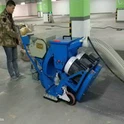
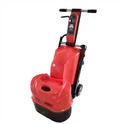
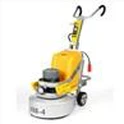
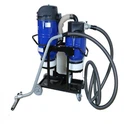
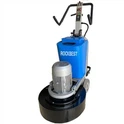
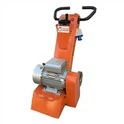

A floor stripper is a rotary driven floor machine that’s powerful enough to remove the top layer from a floor’s surface. Floor strippers can be used on a range of different flooring materials, including carpet, vinyl, rubber, wood and ceramic tiles. Floor stripping can be a one or two step process, starting with the removal of soft flooring.
Benefits of Ride-on Battery Floor Stripper Machine

Versatile
Floor stripping machines are very versatile and they can be used on a wide range of different flooring materials. These machines are suitable for stripping carpet, rubber, vinyl, ceramic tiles and more. There’s no need to use a different machine for every surface, the only thing that might need changing is the size or thickness of the blades. Most machines can accommodate a lot of different blade sizes so you can switch things up, depending on the job.

Improves the look of flooring
Flooring can become dull and discoloured over time, either because of general wear or tear, or layers of varnish or another finish that have built up and trapped dust and dirt. A floor stripper will remove the dirty or discoloured top layer of your flooring to reveal the fresh flooring underneath. This is a great way to improve the look of your flooring, remove dirt and prepare the flooring for a new coat of varnish, adhesive or paint.

Save time and money
Floor stripping machines are a much easier way to remove finishes from floors than using stripping compounds. Often, the compounds can be quite expensive, and may require multiple applications. Removal of the compound can also get quite messy in some cases, but a floor stripping machine is effective and mess-free. It’s also much quicker in comparison to manually applying a compound, saving you time and money on your next project.
Types of Floor Stripping Machines
Walk-Behind Floor Strippers
Self-propelled walk-behind floor stripper machines are the best choice when floor stripping in a small area is required. These hand-operated machines can remove bonded flooring, sports flooring and studded rubber floors. What’s more, these nimble machines can help you strip coverings from an entire floor, especially in areas with little room for mobility.
Electric Ride-On Floor Strippers
Ride-on floor strippers require more space to operate in but work more efficiently and effectively than walk-behind floor strippers. Electric strippers are suitable for large areas which require floor stripping but have little ventilation for the fumes from a propane-powered stripper to escape. These large pieces of machinery can be used to remove vinyl floors, tiles, carpets, sports floors and much more.
Propane Ride-On Floor Strippers
As opposed to their electric counterparts, propane ride-on floor strippers are powered by natural gas. This means that they require a well-ventilated space for safe operation. However, when used for floor stripping they provide optimal efficiency as they are both fast to get the job done and economical.
●Blade width
The width of the blade is a very important factor. We offer blades in widths of 6'-27' for our spring steel blades and 2'-6' for carbide blades. If you are new to floor scrapers, you would be wrong to assume that wider is always better. The ideal width of the blade to use depends on the job. If the material you are removing is heavily adhered to the floor, you would be better served by using a narrower blade, which will allow you to remove material more quickly than a wider blade that causes the machine to bog down and work much harder to separate the material from the floor.
●Other points to consider
If you are using a battery-powered machine, a blade that is too wide will make the machine work harder, drawing more amperage, which equates to less working time before the machine has to be re-charged.
When using a wider blade, the weight of the machine is spread over a larger surface area. Depending on the material you are removing, using a blade that is too wide may leave thin amounts of material or adhesive behind that you will have to go back over to remove (re-scraping). Using a narrower blade allows you to apply more pressure on the cutting edge which may leave a cleaner floor.
A rule of thumb in blade selection is to use the widest blade available that allows the machine to run efficiently, while removing as much material as you want from the floor in a single pass.
●Blade thickness
We only offer one thickness for our Carbide Blades. However, our spring steel blades are currently offered in .062' or our Heavy Duty .094'. A couple of points to consider when choosing a blade thickness are:
The weight of your machine: Depending on how heavy your machine is, you may need to run the heavy-duty blades vs the .062' because the thinner blades may not be able to withstand the weight of the machine. This is more important with flat blades since the self-scoring blades have wings which give the blade more lateral stiffness (like an I beam), but you may still need to run Heavy Duty self-scoring blades.
Flooring material being removed: Thick/stiff material will generally require a thicker blade to resist bending.
Use the 4×4 block to lift the head of the machine (walk-behinds)
For riders or the ES 400S, place the 4×4 underneath the blade clamp to prevent it from rotating.
Take your angle grinder and matching the original angle of the bevel, grind evenly across the length of the blade.
Do not spend too much time in a single spot, or you will get divots in your blade edge.
Take even/quick passes. If you move slowly with a large amount of pressure on the blade, it can become too hot, damaging the harness and causing it to dull faster. If the blade is turning colors, then it is too hot. Stop grinding and put some water on it to keep it cool.
If you do a lot of sharpening, change out grinder pads regularly. This will make sharpening faster and will input less heat into the blade.
Only remove material from the side of the blade with the bevel; do not grind on both sides of the blade.
Once you are finished you may feel a slight burr on the bottom side of the blade. You can remove that burr with a very light pass with the grinder or (if it’s not too heavy of a burr) you can just start using it and the concrete subfloor will remove the burr for you.

Changing the Blade on a Walk-Behind Floor Scraper
While every floor scraper manufacturer is a bit different, the general method of changing the blade on a walk-behind floor scraper involves loosening the bolts between the striker plate and retainer plate. Most walk-behind scrapers need to be tilted back or laid down so the bottom or the machine is exposed as that’s where you loosen the bolts. Once the bolts are loose, you can slide the existing scraper blade out and replace it with a new option.
While some floor scraper blades have notches to show where to place them so you can tighten the bolts back, other blades are flat and you simply tighten the bolts to ensure the striker and retainer plates are tight enough to hold the blades in place. Then tilt the machine back up and it should be ready for use.
Changing the Blade on a Ride-On Floor Scraper
Similarly to the walk-behind floor scraper, you’ll need to remove the blade of a ride-on floor scraper before transport or when the blade is dull or not right for the task. Despite the cumbersome size of the ride-on scrapers, changing their scraper blades are also pretty quick and easy. The blade extends out from the machine, and in most cases, the bolts between the two plates are on top, so there is little maneuvering necessary to quickly swap out your blades.
Putting Your Scraper Blades on the Right Way
Before tightening the bolts, you’ll want to make sure you have the blade in the right way. If your blade has a beveled edge, and most do, you’ll want to face the bevel up when you’re working on a concrete subfloor. However, if you’re working on wood, you’ll want to position the blade so the bevel is face down. This reduces damage to the wood and also reduces dulling the blade.
4 things i learned when using a floor scraper for the first time
Watch out for expansion joints and stick ups
I learned this very quickly and the hard way. It's pretty exciting when you enter your first pass of removal. Right as you're cruising along thinking to yourself, "How did I become a pro so fast!?" you slam right into an expansion joint and damage your blade. That brought me right back down to reality. Before some of the flooring is off you can't see the expansion joints, but once you have uncovered them make sure that you cross then on an angle so that you don't get your blade stuck in them. Not only will you waste money in damaging your blades, you also are wasting time by needing to back up and get over the joint again. Plan out your removal pattern as best as you can to avoid getting stuck in these joints.
Stick ups are a similar problem, but you can normally find them in the floor before you begin removal. It is helpful to go around and circle them with a marker or something that you can see when operating the floor scraper. Depending on the ride on floor scraper that you're using, you may be able to get right up beside the stick ups, but some units are harder to maneuver. Know your machine limitations. If the controls are not sensitive enough, you can removal the small piece of flooring around these stick ups later.
Remove in a logical pattern
Before I began to remove the floor, I didn't really think about what was the best pattern to do so. I kind of just started taking up the flooring. This comes back to bite you because you end up spending a lot of time thinking about where to drive next or having to go back and get a spot you missed later on in the job. I'm not 100% sure what the actual answer would be here because it would depend so much on the type of room you are in. This was one area that I think I wasted a lot of time in.
The sweeper is your best friend
The guy with the broom seems to always get pushed aside. (Ok, I know that was bad. I just had to.)
Anyways, when you are operating the floor scraper, the cleaner things are the easier it is for you to continue taking up flooring. It is almost essential to have someone with you who is sweeping debris not only into a pile for easy clean up at the end of the job, but also keeping debris away from the scraper. As you take up flooring, it can slip under the machines and cause a bumpy ride. As you drive over material it can alter how your blade is sitting on the ground and make removal less effective in some cases.
Depending on the type of material you are removing, the sweeper can also save you tons of money in repair costs. For example, if you were removing tile those shards can really damage the wheels on the scraper. As these parts are not cheap, you want to make sure that you avoid running over this kind of stuff as much as possible. The sweeper keeps your path clear and makes clean up at the end of the job much easier.
Experiment with different blade pitches
The pitch of the blade is one of the most important factors when removing flooring. If your pitch is not correct you will either glaze over the material or potentially gouge the slab. I found that I needed to try out many different pitched depending on where in the floor I was and how tough certain areas were to remove. The pitch changes throughout the job as well. Don't feel like you have to keep it in the same place the whole time. It's crazy the difference in removal ability by just adjusting the pitch slightly.
Depending on the type of ride on floor scraper you have, there may be multiple ways to adjust the pitch. Try out some different combinations to see which is best for the job that you're working on.

We have strict quality control system and has passed CE certificate for all machines. We can do OEM and ODM for your requirements with our own production bases and some well cooperation partners. we have exported our machines to many countries with good reputation and we can quickly and effectively solve the problems for the machine with experienced technician and professional sales.
Certifications


FAQ
As one of the most professional floor scraper machine manufacturers and suppliers in China, we're featured by high quality machines for rental and wholesale. Please rest assured to buy floor scraper machine for sale here from our factory. For price consultation, contact us.
floor scraper for tile floors, floor scraper for rough floors, floor scraper for finishers