


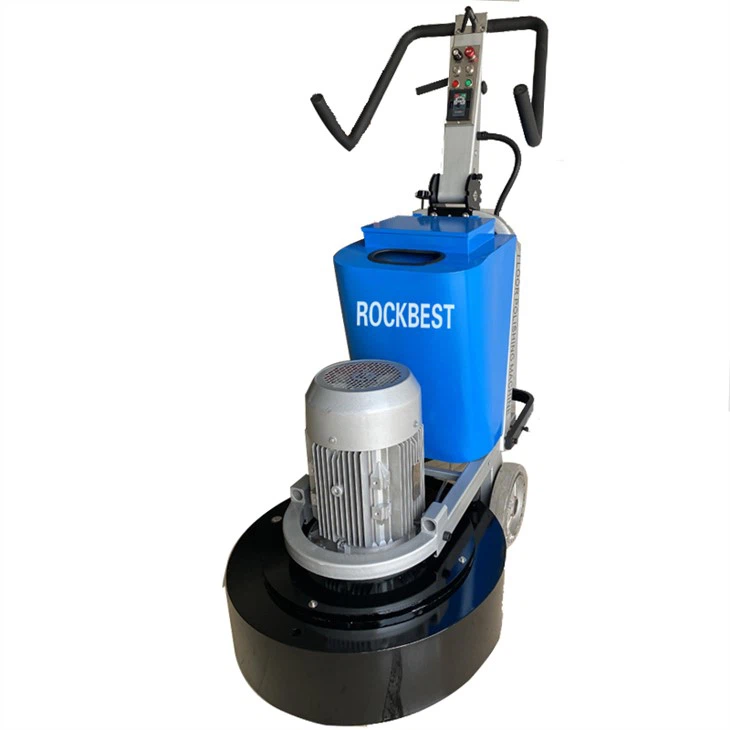
What is Multifunctional Stone Floor Polishing Machine
They work by 'tumbling' the grit particles around in the spinning barrel which repeatedly fall onto the material being polished and the tiny scratches gradually polish the surface.
Why Choose Us
Famous Brand
With 30 years of production technology, our famous floor machine brand is committed to offering you the best price and the highest quality products to grow your business.
Our Products
Rockbest Machinery specializes in developing and manufacturing concrete floor grinders, concrete scarifiers, concrete floor shot blasters, and related floor preparation machines and diamond tools.
Professional Factory
We can fulfill your OEM and ODM requirements with our own production bases and collaborations with partners. We have exported our machines to many countries, earning a good reputation. Our experienced technicians and professional sales team can quickly and effectively resolve any machine issues.
Our Certificates
We have a strict quality control system and all our machines have passed the CE certification. We hold patents for National Invention and New Practical designs.


Advantages of Multifunctional Stone Floor Polishing Machine
Makes Cleaning Your Floors Easier
The floor polisher can be used to clean the floor quickly by getting rid of the dirt and grime that builds up. Some floor polishing machines have different modes of operation (e.g., scrubbing, drying, and vacuuming) so that the user can easily choose the mode that is needed based on the condition of the floor. By using the polishing machine, floor polishing can be done quickly. Similar to the benefit of regularly engaging marble floor polishing services, a polished floor is easier to clean because it has a protective coating that keeps stains and scratches from happening. For example, you can use a damp mop to get rid of the dirt easily.
Doesn't Cause Slippery Floors
If you have a marble floor, one way to maintain a marble floor after completing marble polishing is by applying a coating on the flooring. However, this can make them slippery, so people must be careful. The advantage of using a floor polishing machine is that it will remove a thin layer of material from the floor to make it shine, and the floor will not get slippery. Therefore, the floor polisher can be used to safely polish areas to make the floor shine while making sure it is safe to use. However, if you are unsure of using a floor polisher machine by yourself, it is recommended that you engage professional floor polishing services. Before engaging one, know the things to look out for when choosing a floor polishing service.
Protects Areas With Lots of Foot Traffic
Similar to other types of flooring, one reason why your marble floor requires regular polishing is that when a lot of people walk through an area, their shoes and other footwear track dirt onto the floor which makes it get dirty easily. Using a floor polisher is the most convenient way to clean the floor because the user can only clean the part of the room that is dirty and leave the rest of the floor untouched. The machine also has more than one mode, which means that after cleaning, it can be dried quickly. For most other polishing methods like waxing, smaller areas cannot be polished.
It Is Cost Effective
The floor polisher will clean and shine the floor, therefore, the homeowner won't have to buy additional tiles or carpet to cover the floor. Buying a good floor polisher once is a great way to save money because it can be used to polish the floor several times. If the floor is polished regularly, it can last for decades. The owner won't have to replace the floor, which is usually a more expensive option. Additionally, homeowners can also research the cost of marble floor polishing services in order to weigh the different opportunity costs between doing a DIY marble floor polishing instead of hiring a professional.
It Is Extremely Versatile
The floor polisher is very versatile and can be used to polish not only marble and other stones but also for wood polishing and other types of flooring. The floor polisher usually has different modes of operation like scrubbing, drying, and cleaning, and the user can easily switch between modes as needed.
It Makes Your Floors Cleaner and More Durable
Manually cleaning the floor is difficult and takes a long time because the person doing it has to get the cleaning supplies and use them by hand. Many of the products used for DIY Marble Polishing may be hazardous and cause health issues if they aren't used carefully. Using a floor polisher makes cleaning the floor safer and the design of the polisher makes sure that the floor is cleaned well. The polisher puts a protective coating on the polished marble floor so that dirt and stains stay on the top layer and can be easily wiped away. Thus, the protective coating makes the polished floor last longer because it keeps it in good condition for longer periods of time.
Floor polisher is mainly composed of motor, polishing disc, polishing pad and handle. Its working principle is to drive the polishing disc to rotate at high speed by the motor, driving the polishing pad to rub on the floor surface to achieve the effect of removing stains, grinding and polishing. Polishing pads are usually made of different materials, such as wool pads, nylon pads, etc., and are selected according to different floor materials and cleaning needs.
Based on different uses and functions, floor polishers can be divided into the following categories:
Single disc polishers: This is the most common type and is suitable for most floor materials. It is easy to use and suitable for residential and small commercial applications.
Multi-disc polisher: Usually has two or more polishing discs, which is more efficient and suitable for cleaning and polishing large areas of floor.
High-speed polisher: Has a higher speed, can quickly remove stubborn stains and scratches, and is usually used in professional occasions.
Automatic polisher: Equipped with an automatic control system, it can preset cleaning programs and is suitable for daily maintenance in large public places.
Floor Grinding and Polishing Machine: How to Choose
Grinding and polishing stone floors are essential processes to enhance a floor's appearance and ensure its longevity, preserving its beauty and inherent qualities.


These processes are not only crucial but also intricate, requiring study and experience. They are necessary for both initial installation and the maintenance of already-installed and polished floors. Particularly in high-traffic areas like hotels, shopping centers, and public establishments, periodic repolishing is essential to rejuvenate the space.
First and foremost, grinding and polishing are divided into different phases, each serving a specific purpose. Additionally, various factors, such as stone characteristics and installation methods, directly influence floor quality and the choice of the most suitable grinding and polishing methods.
All these elements also impact the selection of specialized machinery, like marble floor grinders, which must be chosen carefully to ensure optimal results.
Grinding and Polishing Stone Floors: How It Works
Polishing and grinding are essential operations to increase a floor's value and durability, whether it's made of marble, granite, terrazzo, or concrete. Through these processes, it's possible to eliminate marks, achieve the desired finish, and enhance the floor's appeal as a crucial furnishing element.
Grinding and polishing follow distinct phases:
Grinding involves using specific abrasive tools mounted on abrasive holding plates or planetary heads of machines. It typically comprises 5-6 steps and includes phases such as flattening/roughing and closing/finishing to achieve a smooth yet opaque surface.
Following grinding, for a brilliant final result, the process moves to polishing. This can be done through mechanical procedures or by incorporating chemical agents. Polishing comprises pre-polishing, to attain a semi-gloss, and final polishing, necessary for a shiny finish.
To execute these operations effectively, selecting the right floor sander, along with suitable abrasives and tools, is paramount. Let's explore these machines in more detail.
Grinding and polishing machines for Stone, Marble, and Granite Floors: Characteristics and Differences
Floor grinders play a crucial role in finishing processes for marble and granite floors. They are highly versatile, used not only for these materials but also for concrete, Venetian terrazzo, and similar surfaces. Additionally, they're employed for sanding new floors and refurbishing worn surfaces.
Key features that distinguish a marble sander include the type of abrasive plate, the machine's electrical power supply, and speed regulation.
Abrasive Holding Plate of the Floor Sander: Understanding the Differences
The plate, where abrasives are mounted, is critical for processing. Floor machine plates come in various types, such as: Cassani, Comma, and Frankfurt.
The choice depends on factors like the shape of available abrasives and user preferences rather than inherent superiority. For example, Cassani plates are prevalent in Italy and Africa, while Frankfurt plates are common in northern Europe and the USA. The selection of a plate type is primarily a matter of convenience.
In addition to traditional plates, it is possible to use a planetary head, comprising three pads, to expedite processing and improve the final result.
Electrical Power Supply of the machine for Marble, Granite, and Stone
The machine electrical power supply is an essential consideration, as it determines whether it's single-phase or three-phase powered. This choice depends on the available current at the processing location: single-phase power is typically found in residential buildings and three-phase power in industrial settings.
Adjusting the Speed of the floor grinder to the process
Floor grinders may offer fixed or variable speed for the plate rotation. Fixed-speed sanders are suitable for materials like marble, concrete, and terrazzo, while variable-speed sanders are essential for granite and hard stones.
Choosing the right floor grinding and polishing machine depends on these factors and the specifics of the intended work.
Polishing Methods For Stone Floors
While laying the flooring for your home is just one part of the story, you must ensure that it is polished properly. Polishing the stone and ensuring that it looks shiny and bright is not an easy job and requires the services of experts to do the job. While there is no doubt that the entire process is complex and lengthy, there are basically four methods that are used for creating that shine on the natural stone floors. They are.
Buffing with the help of polishing compounds and powders
Using diamond abrasives for grinding
Process of crystallization
Application of Barrier Coating
However, it should be left to the experts to choose the right method taking into account the types of stones. One cannot straight jacket the above four methods and use it for all types of stones. The right polishing method has to be used taking into account the type of stone. We will have a brief look at the four methods of stone floor polishing below.
1. Polishing Powders and Compounds
These are basically fine grains of aluminum. Alternately, tin oxide powder that is abrasive in nature could also be used. These grains and powders are rubbed or in other words buffed on the surface of the stone. This is done carefully and by experts and it does take some time and it could even continue for a few days. This is done to remove the top abrasive layer of the stone floors and expose the shiny part. This process is almost the same as that of sanding with the used of diamonds. But the powder or buffing compound is much finer as far as abrasion properties are concerned.
The process could get an augmentation with the addition of oxalate or oxalic acid with the purpose of creating a reaction that is similar to crystallization. The powder is sprinkled on the stone floor surface and combined with water. This results in a paste or slurry like compound. This is then buffed into the stone with the help of a 175 rpm weight floor machine. The machine is fitted with white pad or hogs hair.
2. Polishing with Diamond Abrasives
Using diamond abrasives and for polishing and grinding is also quite common. This is done by using different types of industrial grade diamonds of various grits. The diamonds come either in three to four inch diameter discs or pads. Around three to six discs are attached to the drive plate of a flooring polishing machine. It is held on with the help of a Velcro. The speed of the floor machine is just around 175 rpm. This drives the plate and sands the stone surface with the help of the diamonds. It helps to remove scratches. The process has to be continued and repeated using finer grits of diamond till the desired levels of mechanical shine is achieved.
3. Coatings of Crystallization
Crystallization is another commonly used procedure for polishing stone floors. This is done using a chemical called fluorosilicate. It is sprayed on the stone. Once this has been done, the stone is buffed with the help of steel wool pads. This results in shiny, glassy and new crystals to be formed on the surface of the stone flooring. This is done with the help of a standard 175 rpm floor machine. A heavy drive plate is used for creating the heat and the required friction to forming and then polishing of the crystals.
4. Barrier Coating
This is the last of the four types of methods used for polishing of stone floors. This is also referred to as waxing of the surface. It helps to create an artificial shine. A semi-liquid or liquid form of wax, urethane, acrylics or other types of polymers are applied. The application on the stone surface is done with the help of a mop, sprayer, lamb's wool applicator or roller. While some of the wax materials have to be buffed, the others are left as applied. This helps to achieve the required level of shine. The application process is done with the help of a high speed burnishing floor machine. These have either hogs hair or fiber as pads. The process is however, not suitable for stones that are porous in nature.
We have strict quality control system and has passed CE certificate for all machines. We can do OEM and ODM for your requirements with our own production bases and some well cooperation partners. we have exported our machines to many countries with good reputation and we can quickly and effectively solve the problems for the machine with experienced technician and professional sales.

Our Certificate


FAQ
Hot Tags: multifunctional stone floor polishing machine, China multifunctional stone floor polishing machine manufacturers, suppliers, factory, durable concrete polishing system for building floors, versatile concrete polishing system for building surfaces, manual concrete polisher for building floors, concrete surface shining machine, precision concrete grinding system for building surfaces, efficient concrete polisher for building floors


