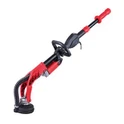
Hey there! As a supplier of concrete floor grinders, I often get asked about the recommended working speed for these machines. It's a crucial question because getting the speed right can make a huge difference in the quality of your concrete floor grinding job. So, let's dive into this topic and find out what's the best working speed for a concrete floor grinder.
First off, let's understand why the working speed matters. The speed at which you operate a concrete floor grinder affects several aspects of the grinding process. It impacts the finish of the floor, the efficiency of the operation, and even the lifespan of the grinding discs. If you go too fast, you might not get a smooth finish, and you could also wear out the discs more quickly. On the other hand, if you go too slow, the job will take forever, and you might end up with uneven grinding.
Now, there's no one - size - fits - all answer to the question of the recommended working speed. It depends on a few factors.
Factors Affecting the Recommended Working Speed
1. Type of Concrete
The hardness and density of the concrete play a big role. Harder and denser concrete requires a slower working speed. For example, high - strength concrete that's been cured for a long time will be more resistant to grinding. You'll need to go slower to ensure that the grinding discs can effectively break down the surface layer of the concrete. On the other hand, softer concrete can tolerate a slightly faster speed.
2. Condition of the Floor
If the floor has a lot of imperfections, like bumps, cracks, or old coatings, you'll need to adjust the speed accordingly. When dealing with a heavily damaged floor, it's better to start at a slower speed to remove the irregularities. As the floor becomes smoother, you can gradually increase the speed.
3. Type of Grinding Disc
Different grinding discs are designed for different purposes and speeds. Coarse - grit discs, which are used for initial rough grinding, can usually handle a slower speed. They are meant to remove a significant amount of material, and going too fast might cause them to overheat or wear out prematurely. Fine - grit discs, used for finishing, can often work at a faster speed to achieve a smooth surface.
4. Machine Power
The power of the concrete floor grinder also influences the working speed. A more powerful machine can generally handle a faster speed without losing effectiveness. If you have a low - power grinder, you'll need to be more conservative with the speed to avoid overloading the motor.
General Guidelines for Working Speeds
For most standard concrete floor grinding jobs, a good starting point is to set the speed between 150 and 300 rotations per minute (RPM). This range allows for a balance between material removal and achieving a decent finish.
If you're using a Grinding Concrete Floor Machine for the initial rough grinding of a moderately hard concrete floor, a speed of around 150 - 200 RPM is often ideal. This slow speed gives the coarse - grit discs enough time to break down the top layer of the concrete and remove any old coatings or imperfections.
As you move on to the intermediate grinding stage, where you're starting to smooth out the floor, you can increase the speed to 200 - 250 RPM. This will help to refine the surface and prepare it for the final finishing steps.
When it comes to the final finishing with a Concrete Floor Sanding Machine, using fine - grit discs, you can bump the speed up to 250 - 300 RPM. This faster speed helps to create a smooth, polished surface.
However, these are just general guidelines. You'll need to do some test runs on a small, inconspicuous area of the floor to see how the machine and discs perform at different speeds. This will allow you to make any necessary adjustments based on the specific conditions of your job.
Tips for Finding the Right Speed
- Observe the Grinding Action: Pay close attention to how the grinder is interacting with the floor. If the machine is vibrating excessively, it could be a sign that the speed is too high. If the discs aren't making much progress, the speed might be too low.
- Check the Disc Temperature: After a short period of grinding, feel the grinding discs. If they're getting too hot, it could mean that you're going too fast. Overheating can damage the discs and reduce their lifespan.
- Monitor the Finish: Look at the surface of the floor as you grind. If it's uneven or has a rough texture, you might need to adjust the speed. A smooth, consistent finish is a good indication that you've found the right speed.
The Importance of Training and Experience
Even with these guidelines, finding the perfect working speed takes some practice. That's why it's important for operators to receive proper training. Training programs can teach operators how to read the signs of the grinding process and make the necessary adjustments to the speed.
Experience also plays a huge role. The more floors you grind, the better you'll get at quickly assessing the conditions and setting the right speed. Experienced operators can often tell just by looking at the floor and the machine's performance what speed will work best.
Choosing the Right Concrete Floor Grinder
As a supplier, I know that choosing the right Cement Floor Grinder is just as important as finding the right working speed. You need a machine that's powerful enough for the job, has adjustable speed settings, and is compatible with the type of grinding discs you'll be using.
When you're in the market for a concrete floor grinder, consider the size of the area you'll be working on, the type of concrete you'll be grinding, and your budget. A high - quality grinder might cost more upfront, but it will save you time and money in the long run by providing better performance and durability.
Wrapping It Up
In conclusion, the recommended working speed for a concrete floor grinder depends on several factors, including the type of concrete, the condition of the floor, the type of grinding disc, and the machine power. While general guidelines can give you a starting point, it's essential to do test runs and make adjustments based on the specific conditions of your job.


If you're in the process of planning a concrete floor grinding project or are looking to upgrade your equipment, I'd love to help. As a supplier, I can offer you expert advice on choosing the right machine and grinding discs, as well as tips on getting the best results. Don't hesitate to reach out for a consultation and let's start planning your next successful concrete floor grinding job.
References
- Concrete Construction Handbook, various editions
- Manufacturer's manuals for concrete floor grinders
- Industry research on concrete floor grinding techniques