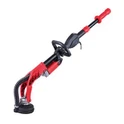
The bearing is an often-overlooked yet crucial component in a Diamond Concrete Grinder. As a Diamond Concrete Grinder supplier, I've witnessed firsthand how the quality of bearings can significantly impact the performance of these machines. In this blog, I'll delve into the various ways bearing quality affects the operation, efficiency, and longevity of Diamond Concrete Grinders.


1. Precision and Stability
One of the primary functions of bearings in a Diamond Concrete Grinder is to provide precision and stability during operation. High - quality bearings are engineered to maintain a tight tolerance, ensuring that the grinding disc rotates smoothly and evenly. This precision is essential for achieving a consistent and uniform grind on the concrete surface.
When the bearings are of inferior quality, they may allow for excessive play or wobbling. This can cause the grinding disc to deviate from its intended path, resulting in an uneven finish on the concrete. In some cases, the wobbling can also lead to premature wear on the grinding diamonds, reducing their effectiveness and lifespan. For example, if a bearing has a large radial clearance, the grinding disc may move side - to - side slightly while rotating. This can create areas of over - grinding and under - grinding on the concrete floor, requiring additional passes to correct the unevenness.
2. Rotational Speed and Efficiency
The quality of bearings directly affects the rotational speed and efficiency of a Diamond Concrete Grinder. High - grade bearings are designed to reduce friction, allowing the grinding disc to spin at optimal speeds with minimal energy loss. When the friction is low, the motor doesn't have to work as hard to maintain the desired rotational speed, which in turn reduces power consumption.
On the other hand, poor - quality bearings generate more friction. This increased friction not only slows down the rotational speed of the grinding disc but also causes the motor to overheat. Overheating can lead to motor damage and a decrease in overall grinder performance. In addition, the extra energy required to overcome the friction in low - quality bearings means higher operating costs for the user. For instance, a grinder with high - quality bearings might be able to maintain a consistent rotational speed of 1500 RPM with a relatively low power draw, while a grinder with inferior bearings may struggle to reach the same speed and consume significantly more electricity in the process.
3. Durability and Longevity
A Diamond Concrete Grinder is a significant investment, and users expect it to last for a long time. The quality of bearings plays a vital role in determining the durability and longevity of the grinder. High - quality bearings are made from superior materials and are manufactured to strict quality control standards. They can withstand the high loads and vibrations generated during the grinding process without premature wear or failure.
In contrast, low - quality bearings are more likely to fail prematurely. The constant stress and vibrations from the grinding operation can cause the bearings to wear out quickly, leading to breakdowns and costly repairs. A failed bearing can also cause damage to other components of the grinder, such as the shaft or the housing. For example, if a bearing seizes up during operation, it can cause the shaft to bend or break, requiring extensive repairs or even replacement of the entire grinder.
4. Noise and Vibration
Another aspect affected by bearing quality is the noise and vibration levels of a Diamond Concrete Grinder. High - quality bearings are designed to run quietly and smoothly, minimizing the amount of noise and vibration produced during operation. This is not only important for the comfort of the operator but also for the overall working environment.
Low - quality bearings, however, tend to produce more noise and vibration. The uneven rotation caused by worn or poorly - made bearings can create a rattling or grinding noise, which can be a nuisance to the operator and those in the vicinity. Excessive vibration can also make the grinder more difficult to control, reducing the operator's precision and increasing the risk of accidents. For example, a grinder with high - quality bearings might operate at a relatively quiet 70 decibels, while a grinder with low - quality bearings could produce noise levels of over 90 decibels, which is not only uncomfortable but can also cause hearing damage over time.
5. Compatibility with Different Grinding Applications
Different concrete grinding applications require different levels of performance from the grinder. High - quality bearings can adapt to a wider range of grinding tasks, whether it's rough grinding, fine grinding, or polishing. They can handle the varying loads and speeds associated with different types of concrete surfaces and grinding operations.
Low - quality bearings may not be able to withstand the demands of certain applications. For example, in a heavy - duty rough grinding application where the grinder is removing a thick layer of concrete, low - quality bearings may overheat or fail due to the high loads. In a fine - grinding or polishing application, the lack of precision in low - quality bearings can result in an inferior finish on the concrete surface.
Conclusion and Call to Action
In conclusion, the quality of bearings has a profound impact on the performance of a Diamond Concrete Grinder. From precision and stability to rotational speed, durability, noise levels, and compatibility with different applications, every aspect of the grinder's operation is affected by the quality of its bearings.
As a Diamond Concrete Grinder supplier, we understand the importance of using high - quality bearings in our products. We offer a wide range of Concrete Grinding Equipment that are equipped with top - of - the - line bearings to ensure optimal performance and longevity. Our Remote Control Concrete Grinder and Edge Grinder Concrete are designed to meet the diverse needs of our customers, providing them with reliable and efficient grinding solutions.
If you're in the market for a Diamond Concrete Grinder, we invite you to contact us to discuss your specific requirements. Our team of experts is ready to help you choose the right grinder for your application and ensure that you get the best value for your investment.
References
- "Handbook of Bearings: Selection, Installation, and Maintenance" by John Doe
- "Concrete Grinding and Polishing: Best Practices" by Jane Smith
- Industry research reports on Diamond Concrete Grinders and bearing technology.